Cable Deck Railing — Views Without Limits
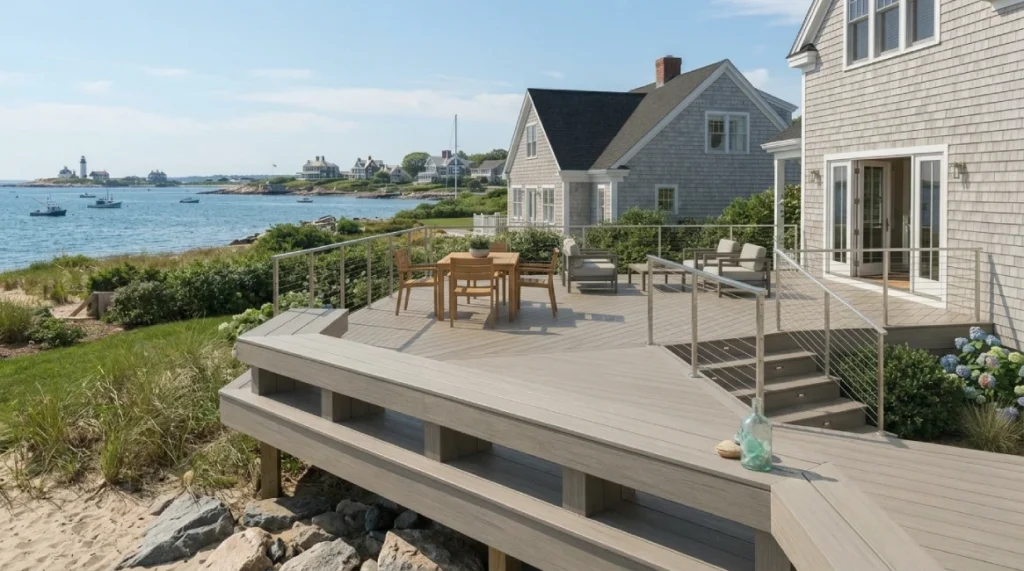
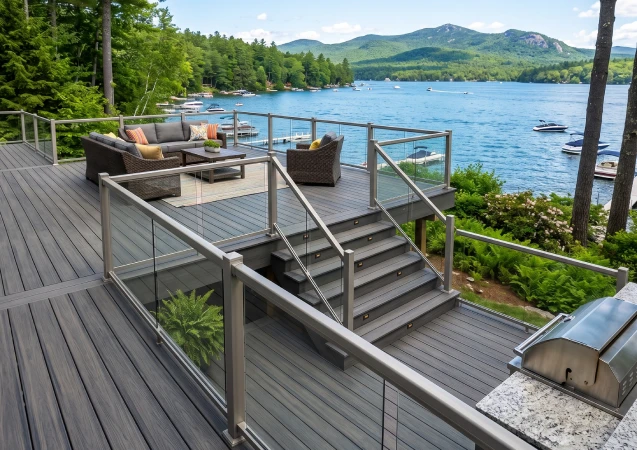
Thin horizontal stainless cables that all but disappear at conversation distance. If your deck faces water, woods, or a skyline, cable railing is how you protect the reason you built it.
DECKS US
·
Decks US
·
DECKS US
·
Decks US
·
DECKS US
·
Decks US
·
DECKS US
·
Decks US
·
DECKS US
·
Decks US
·
You Didn't Buy the Lot for the Railing
Homeowners who choose cable deck railing almost always say a version of the same thing: “I don’t want to look at a fence.” That’s the entire proposition. Thin stainless cables — typically spaced about three inches apart to meet code — sit so lightly in the sightline that your eye reads straight past them to the lake, the tree line, or the water beyond.
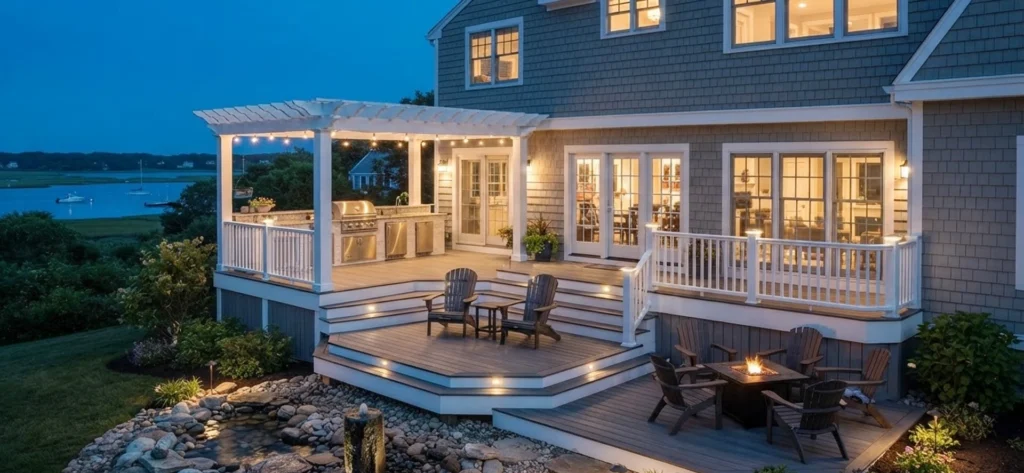
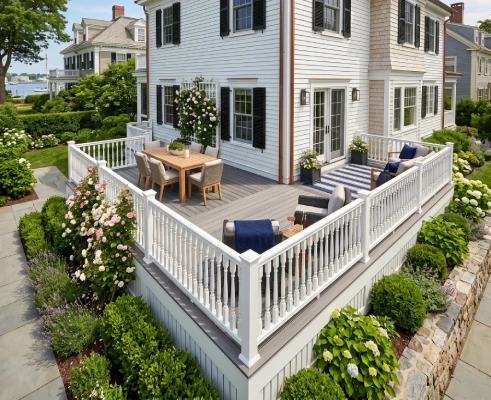
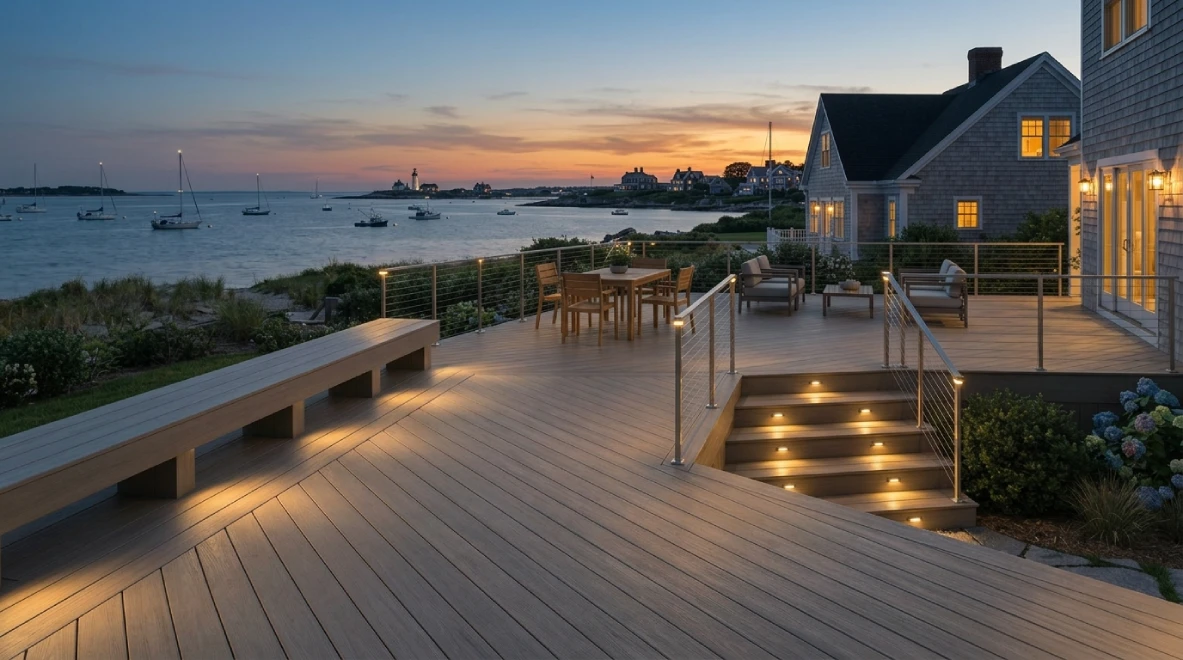
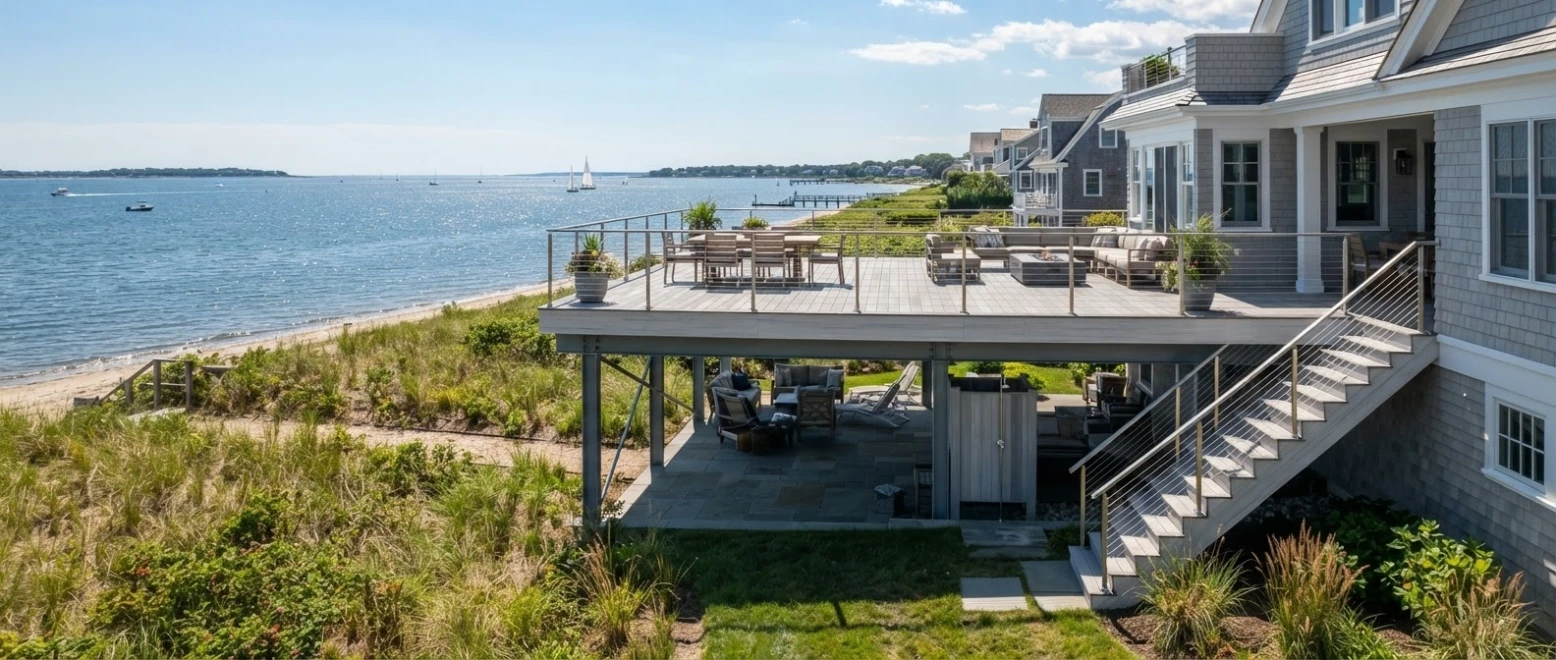
Decks US installs cable railing across New York and New England, most often on lakeside, wooded, elevated, and coastal properties where the view is the whole point of the deck. It’s an industrial-modern look that has become a mainstream favorite, and it pairs beautifully with both contemporary and traditional New England homes.
Why Cable, Specifically
- The most open view of any railing except glass
— and unlike glass, no reflections and no smudges
- Airflow
— cable lets the breeze through, which matters on hot, still summer evenings
- Genuinely strong
— properly tensioned stainless cable is a serious safety barrier
- Low maintenance
— an occasional wash and a periodic tension check
- Works with any post material
— cedar posts, aluminum frames, or composite, per the 2026 mixed-material trend
- Lighter visual weight than glass
— less “wall of panels,” more “frame around the view”
Stainless Grades: Why T316 Matters Near the Coast
Here’s the single most important thing on this page, and most builders don’t mention it: cable railing hardware comes in different stainless grades, and the wrong one fails near salt water.
- T304 stainless — the standard grade, fine for inland properties
- T316 marine-grade stainless — contains added molybdenum specifically to resist salt-induced pitting and corrosion
Within roughly five miles of the ocean — the Cape, South Shore, Newport, Narragansett, the Connecticut shoreline — T304 will eventually show rust staining and pitting where T316 will not. On every coastal project we spec T316 marine-grade throughout: cables, fittings, and fasteners. It costs more. It’s also the difference between a railing that looks new in 20 years and one that’s streaking rust in five.

Phone number
+978 601 4092
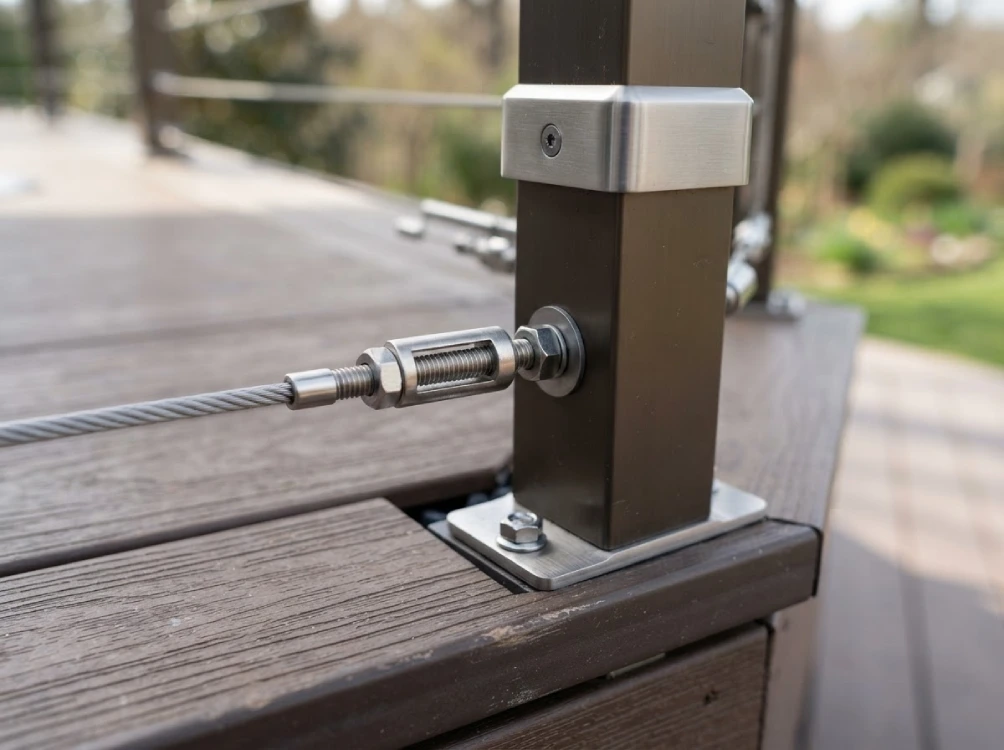
Tension & Code — Why Professional Installation Matters
Cable railing is the one railing type where installation quality is not cosmetic — it’s the safety system. Cables must be tensioned precisely and evenly: too loose and they deflect beyond code and fail inspection; over-tensioned and you can bow the end posts over time. End posts also need serious reinforcement, because every cable in the run pulls against them.
This is why cable is a poor DIY project and a great professional one. We engineer the post structure for the cumulative tension load, tension to manufacturer spec, and re-check before handover. Standard code applies as with any railing: generally required above 30 inches, typically 36–42 inches tall, with infill spacing tight enough that a 4-inch sphere can’t pass — which is why cables run about 3 inches apart.
One thing worth knowing: some jurisdictions have historically restricted horizontal infill on residential railings over climbability concerns. Rules vary town to town across our six states, and we confirm your local requirement before designing — not after.
Cable vs. Glass — How They Stack Up
Cable Railing
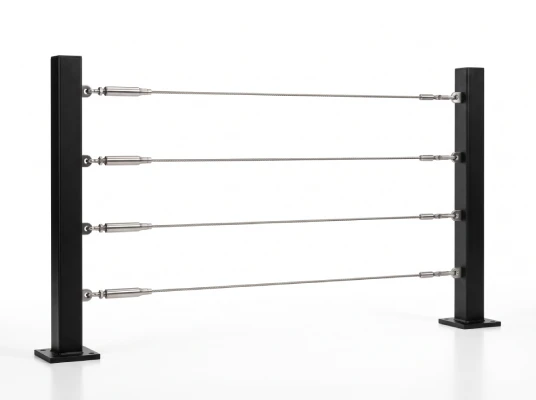
View: Excellent — cables read as lines
Airflow: Yes — breeze passes through
Maintenance: Occasional wash + tension check
Cost: High
Look: Industrial-modern, light
Best for: Views + breeze + value
Glass Railing
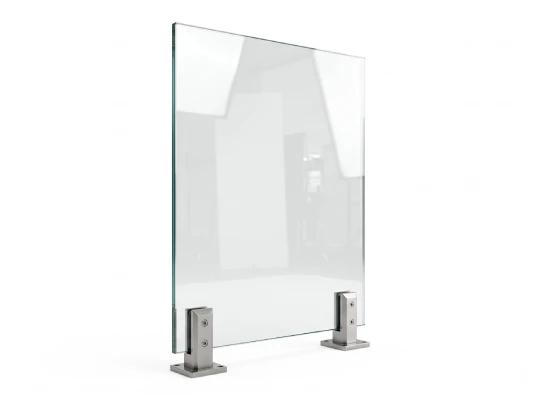
View: Best — completely uninterrupted
Airflow: No — acts as a windbreak
Maintenance: Regular cleaning (smudges, salt film, pollen)
Cost: Premium
Look: Seamless, luxury
Best for: Prime views + wind protection
Where Cable Belongs in New England
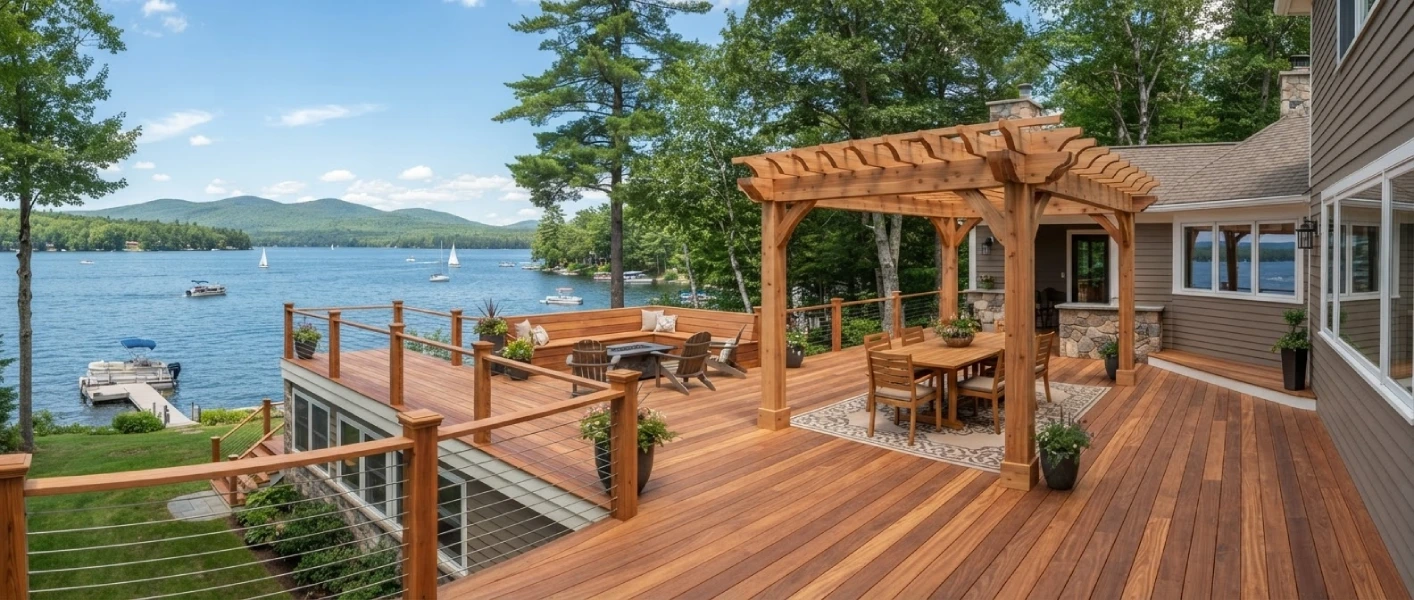
- Lakeside (Winnipesaukee, Champlain, the Berkshires) — cable + cedar posts is the definitive Northeast lake look
- Coastal (Cape, South Shore, RI/CT shoreline) — outstanding, with T316 hardware as non-negotiable
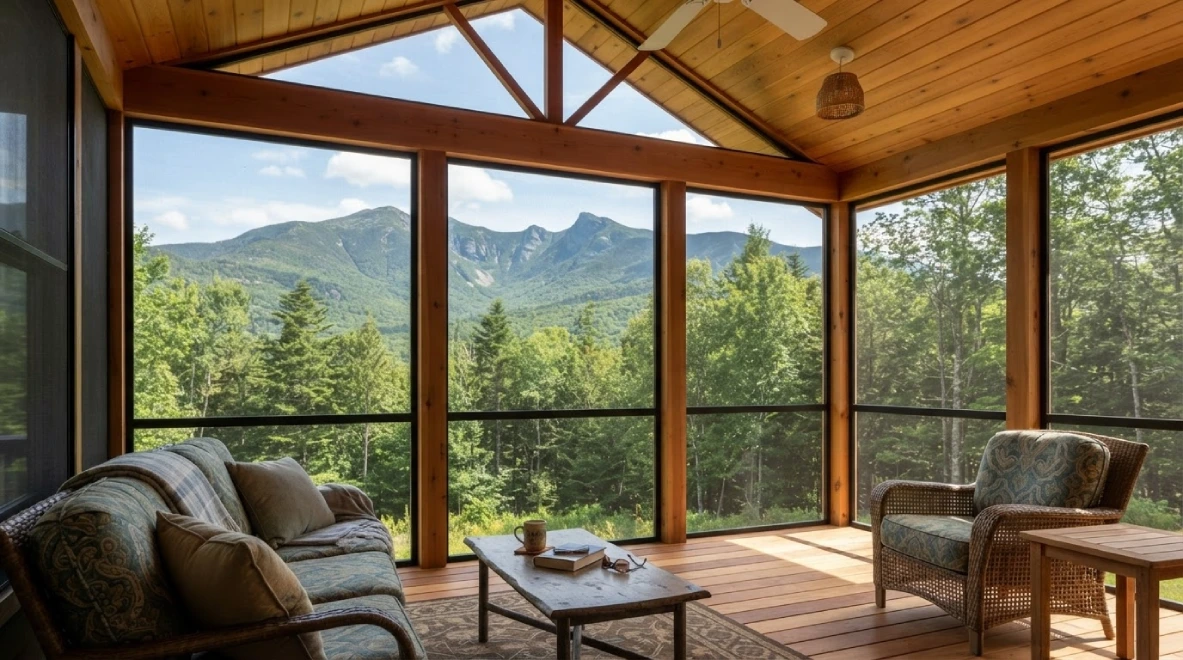
- Wooded and elevated lots — preserves the tree line and the drop-away view
- Modern and contemporary homes — the clean horizontal line suits the architecture exactly
Installation
Post structure engineered for cumulative cable tension. Reinforced end and corner posts. Even, spec-tensioned runs. Stainless hardware throughout, T316 on the coast. And a tension re-check before we hand the deck over — because a cable railing that’s right on day one and loose in year two was never installed properly.
Cost
Cable sits high in the installed railing range — above aluminum and composite, below glass. You’re paying for stainless hardware and the labor precision the system demands.
·
selected projects
·
selected projects
·
selected projects
·
selected projects
·
selected projects
·
selected projects
·
selected projects
·
selected projects
·
selected projects
·
selected projects
Explore our recent project

QUICK ENQUIRY
·
QUICK ENQUIRY
·
QUICK ENQUIRY
·
QUICK ENQUIRY
·
QUICK ENQUIRY
·
QUICK ENQUIRY
·
QUICK ENQUIRY
·
QUICK ENQUIRY
·
QUICK ENQUIRY
·
QUICK ENQUIRY
·
We’d love to hear from you
Phone number
+978 601 4092
We’d love to share more with you, please complete this form and our dedicated team will get back to you shortly.
Service Areas
Where We Build
Local crews across New York & New England — find your team and direct line, or enter your ZIP.
Massachusetts & New York
Tinos Inc.
Greater Boston, MetroWest, Cape Cod, Westchester, Hudson Valley & Long Island.
(617) 231-9842MANY
Connecticut, Rhode Island, Vermont & New Hampshire
Hartford, Providence, Newport, Burlington, Manchester, the Seacoast & beyond.
(978) 601-4092CTRIVTNH
ZIP Lookup
Enter your ZIP, meet your team
Your local team & direct number appear instantly.
FAQ — Cable Deck Railing
What is cable railing and how does it work?
Cable railing replaces traditional balusters with thin horizontal stainless-steel cables tensioned between posts, typically spaced about three inches apart to meet code. Because the cables are so thin, they nearly disappear at viewing distance — which is why cable deck railing is the go-to choice for decks with water, woods, or skyline views.
What's the difference between T304 and T316 stainless cable railing?
T316 is marine-grade: it contains added molybdenum that resists salt-induced pitting and corrosion. T304 is the standard grade and performs well inland. Within about five miles of the ocean, T316 is essential — standard stainless will eventually pit and rust-streak in salt air, while T316 will not.
Does cable railing need maintenance?
Very little — an occasional wash and a periodic tension check. Cables can relax slightly over the first year as the system settles, so we re-check tension before handover and recommend a check every couple of seasons after.
Is cable railing safe for kids and pets?
Yes, when installed correctly. Properly tensioned cables spaced to code create a strong barrier that meets the same requirements as any other railing. The critical word is tensioned — loose cables deflect too far and are both unsafe and non-compliant, which is why professional installation matters more with cable than any other railing type.
Is cable railing more expensive than aluminum?
Yes — cable costs more installed than aluminum railing, because of stainless hardware costs and the precision the installation demands. It’s chosen for the view, not the value.
Cable or glass railing — which should I choose?
Both keep the view open. Cable costs less, lets the breeze through, and needs almost no cleaning. Glass gives a completely uninterrupted view and blocks wind, but costs more and shows smudges, pollen, and salt film. For most view decks we recommend cable; glass wins when you want the wind blocked too.
·
Articles & insights
·
Articles & insights
·
Articles & insights
·
Articles & insights
·
Articles & insights
·
Articles & insights
·
Articles & insights
·
Articles & insights
·
Articles & insights
·
Articles & insights