LED Deck & Step Lighting — Your Deck, After Sunset
You’re home at seven. The sun’s gone at eight. Layered low-voltage lighting keeps the best room in the house open long after dark — safely, beautifully, for pennies a night.
DECKS US
·
Decks US
·
DECKS US
·
Decks US
·
DECKS US
·
Decks US
·
DECKS US
·
Decks US
·
DECKS US
·
Decks US
·
Lighting Stopped Being an Upgrade
Something changed in the last two years: deck lighting moved from an optional extra to a standard part of every serious deck conversation. The reason is simple and a little obvious — homeowners actually use their decks after dark. Weeknights after work. Dinners that run long. The last conversation of a Saturday. All of it happens after sunset, and an unlit deck simply closes at dusk.
Decks US designs and installs low-voltage LED lighting across New York and New England — built into new decks during construction and retrofitted invisibly onto existing ones. We design in layers, the way lighting designers do, because the single-floodlight approach makes a deck look like a parking lot.
The Fixture Types — And What Each One Is For
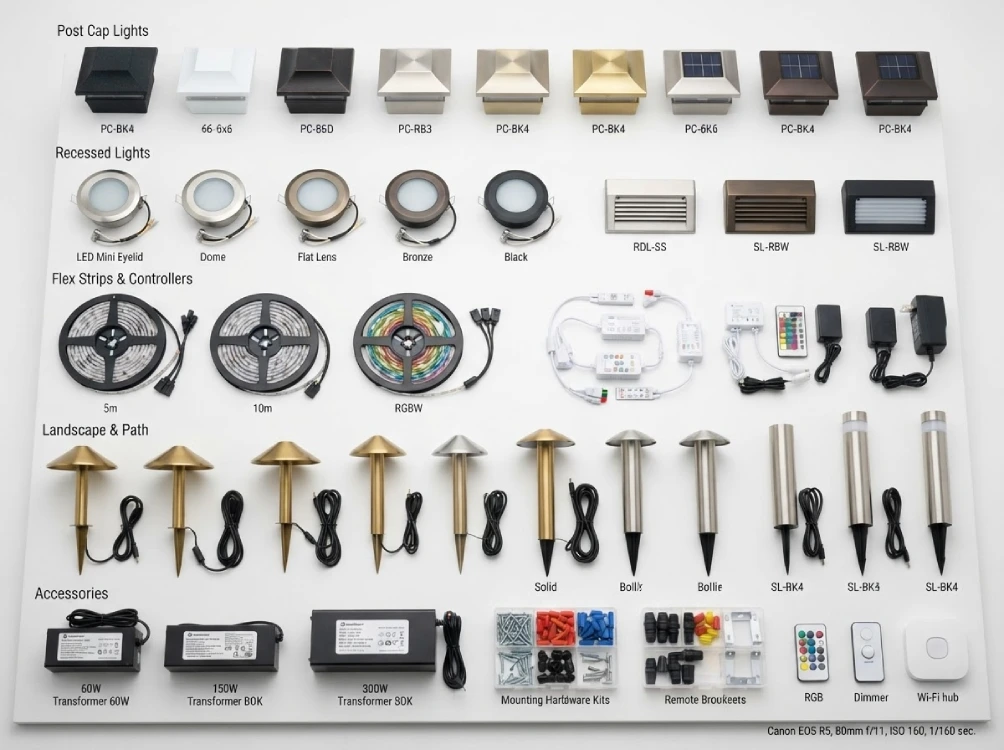
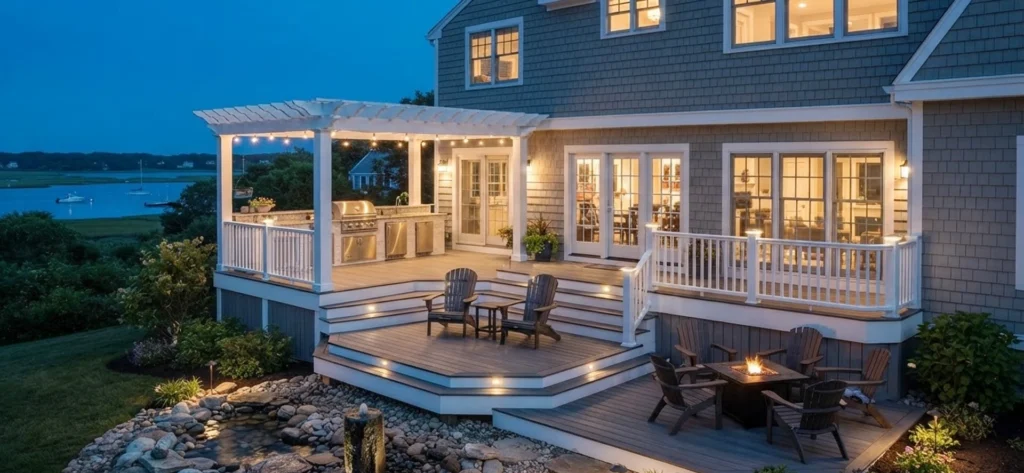
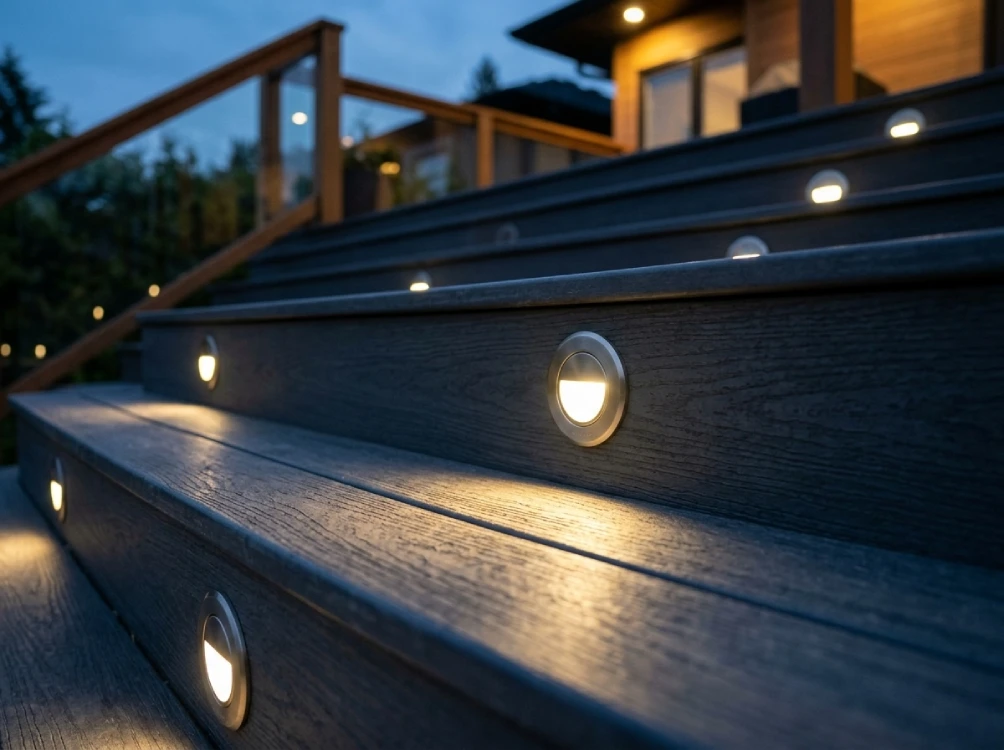
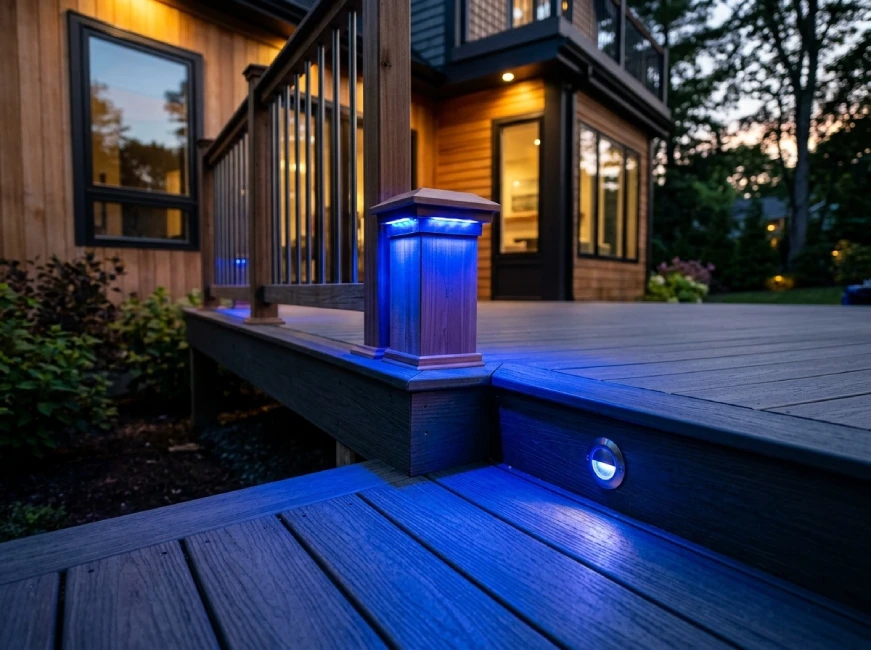
- Stair riser lights — the safety essential. Small fixtures mounted in each riser cast light down onto the tread. Poor outdoor lighting is a well-documented contributor to household falls; if you install one thing, install these.
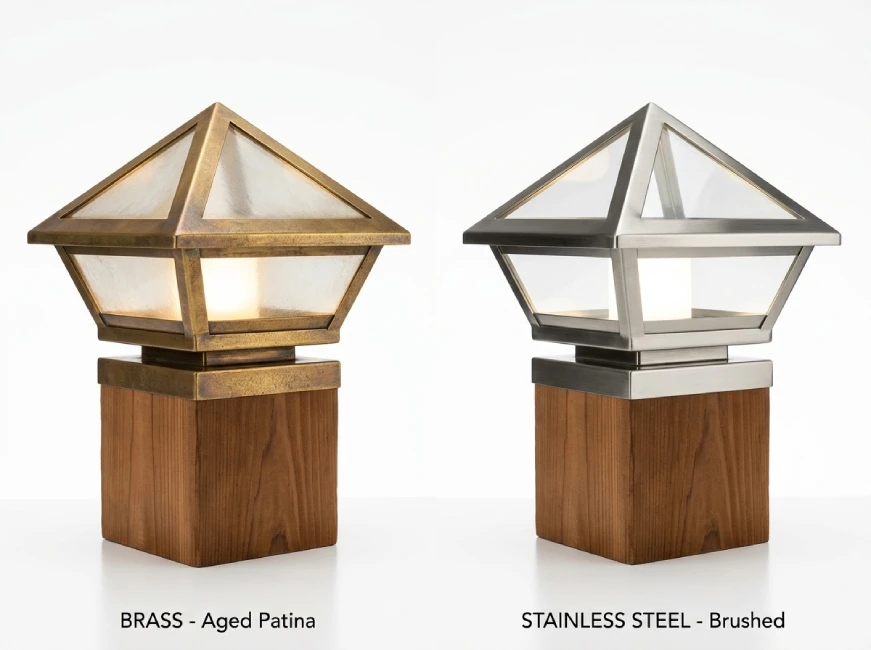
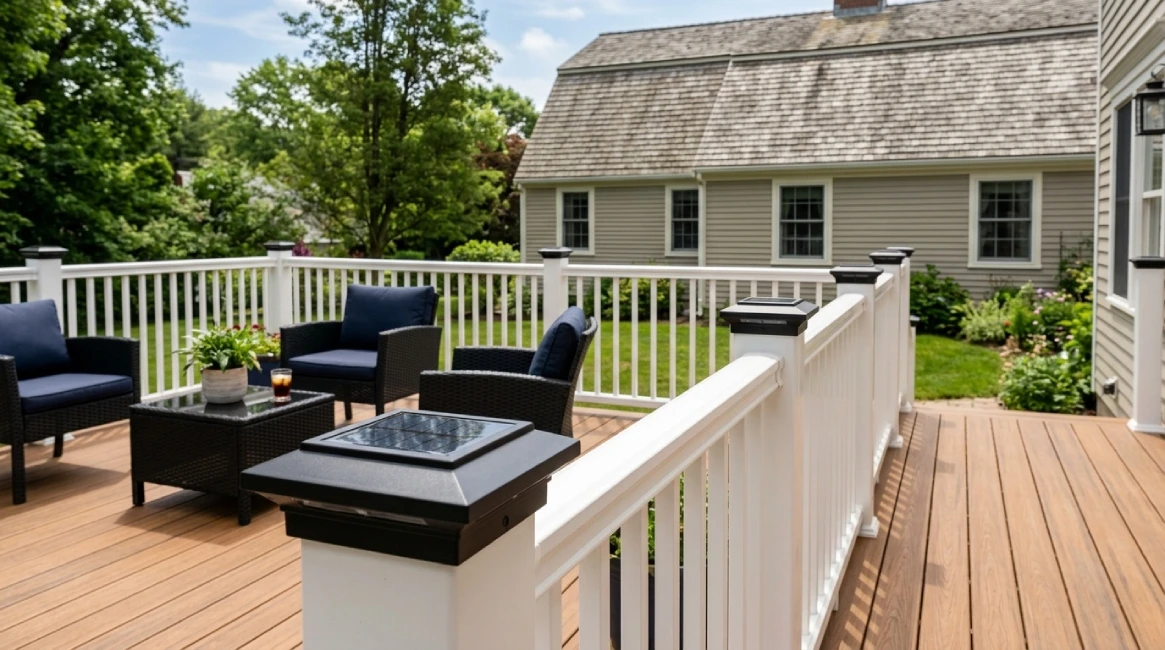
- Post cap lights — sit on top of railing posts, defining the deck’s perimeter with a soft ambient glow. Often the easiest retrofit of all.
- Under-rail lighting — concealed strips beneath the top rail that wash light down across the deck surface. No visible fixture, all effect.
- Integrated handrail lighting — continuous LED running inside a channel in the top rail itself. The sleekest architectural line at night, increasingly the premium choice on modern railing.
- Recessed deck lights — flush-mounted into the deck surface or fascia to mark edges and pathways.
- Wedge and accent lights — low-profile fixtures that fill the shadow zones post caps and risers can’t reach.
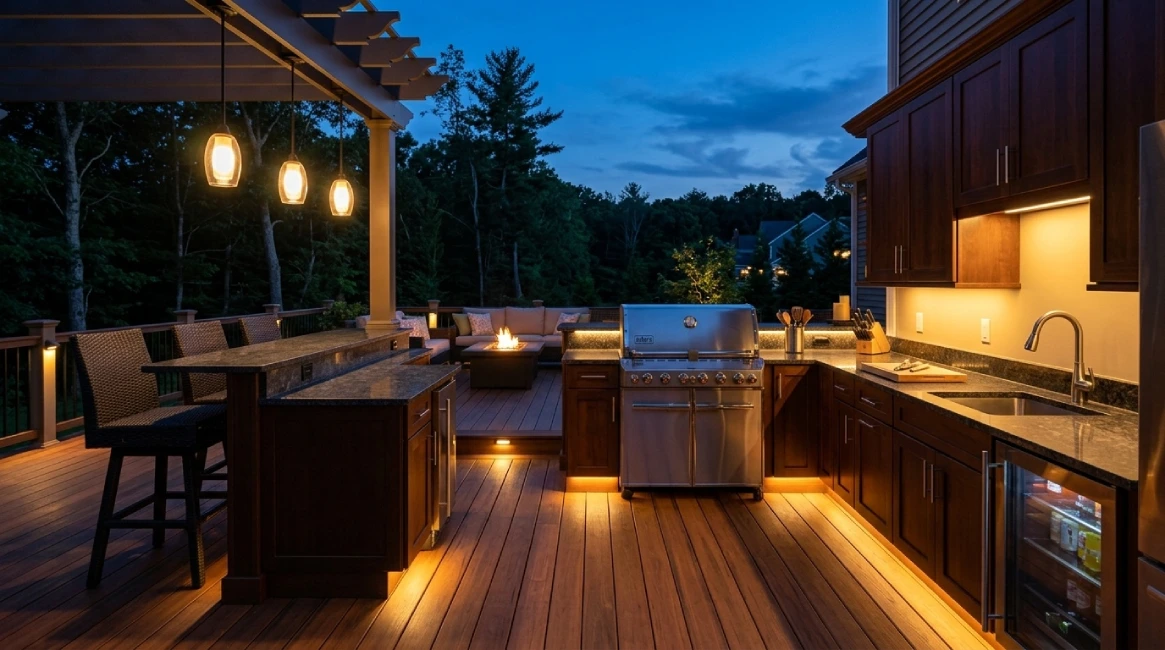
- Task lighting — focused light where work happens: grill zones, bars, and outdoor kitchens.
Layered Design — The Professional Method
Great deck lighting is three layers working together:
- Ambient — the base glow (post caps, under-rail) that defines the space
- Task — bright enough to actually cook and step by (stairs, grill, bar)
- Accent — the finishing touch (uplit posts, washed planters, a pergola edge traced in light)
As a rough working guide, ambient fixtures typically fall in the low-tens of lumens each, while task areas like stairs want meaningfully more. Total illumination comes from spacing and layering, not from making individual fixtures brighter — which is the mistake that produces glare instead of atmosphere.

Phone number
+978 601 4092
Warm White vs. Color-Changing — An Honest Take
Warm white (2700–3000K) is our default recommendation, always. It flatters wood and composite tones, pairs with firelight instead of clashing with it, and feels like evening rather than an office corridor.
But 2026’s defining trend is color-changing RGB. Post caps, riser lights, and accent fixtures now offer full-spectrum color with app or Bluetooth control, and the technology has matured well past novelty — weatherproofing and LED chip quality are genuinely good now.
Choose a system that does both. Live in warm white for everyday evenings — that’s what makes the deck feel beautiful — and use color for the Fourth of July, a birthday, or a holiday. Buying color-only and living in color is how a deck ends up looking like a nightclub. Buying warm-only means missing out on something genuinely fun.
Smart Control
Modern low-voltage transformers commonly include timers and smartphone connectivity, which is more useful than it sounds: the deck lights itself at sunset without anyone thinking about it, dims for dinner, and shuts down on schedule. Scenes let you set “dinner,” “party,” and “just the stairs” and switch between them from your phone.
Safety & Wiring — Why Low-Voltage Wins
Essentially all quality deck lighting runs on low-voltage 12V or 24V DC, and that’s the right answer for outdoor use: dramatically lower electrical risk than line voltage, safe in rain and snow by design, and far simpler and less disruptive to install. LEDs draw a fraction of the power older halogen systems did, so a fully lit deck costs pocket change a month to run every evening.
Cost
Deck lighting is one of the lowest-cost, highest-impact upgrades in outdoor living — a small fraction of a deck’s total budget for a disproportionate change in how much you use it. Running cost is negligible with LED
·
selected projects
·
selected projects
·
selected projects
·
selected projects
·
selected projects
·
selected projects
·
selected projects
·
selected projects
·
selected projects
·
selected projects
Explore our recent project

QUICK ENQUIRY
·
QUICK ENQUIRY
·
QUICK ENQUIRY
·
QUICK ENQUIRY
·
QUICK ENQUIRY
·
QUICK ENQUIRY
·
QUICK ENQUIRY
·
QUICK ENQUIRY
·
QUICK ENQUIRY
·
QUICK ENQUIRY
·
We’d love to hear from you
Phone number
+978 601 4092
We’d love to share more with you, please complete this form and our dedicated team will get back to you shortly.
Service Areas
Where We Build
Local crews across New York & New England — find your team and direct line, or enter your ZIP.
Massachusetts & New York
Tinos Inc.
Greater Boston, MetroWest, Cape Cod, Westchester, Hudson Valley & Long Island.
(617) 231-9842MANY
Connecticut, Rhode Island, Vermont & New Hampshire
Hartford, Providence, Newport, Burlington, Manchester, the Seacoast & beyond.
(978) 601-4092CTRIVTNH
ZIP Lookup
Enter your ZIP, meet your team
Your local team & direct number appear instantly.
FAQ — LED Deck & Step Lighting
Is low-voltage deck lighting safe in rain and snow?
Yes. Low-voltage 12V and 24V systems are the outdoor standard precisely because they carry far less electrical risk than line voltage, and quality fixtures are sealed and rated for wet conditions. We use fixtures rated for New England winters, with corrosion-resistant hardware near the coast.
What color temperature is best for deck lighting?
Warm white, 2700–3000K. It flatters wood and composite tones, complements fire features, and feels like evening rather than a parking lot. Color-changing RGB systems are the big 2026 trend — our recommendation is a system that does both, so you live in warm white and use color for occasions.
Can deck lighting be added to an existing deck?
Yes — retrofit lighting is one of our most popular upgrades. Stair lights, post caps, and under-rail runs install with concealed wiring, typically in a day or two, without tearing up the deck.
Which deck lights matter most if I'm on a budget?
Stair riser lights, without question — they’re the safety layer, and poor lighting is a known contributor to falls. After that, add perimeter ambient light (post caps or under-rail), then task lighting at the grill.
How much does deck lighting cost to run?
Almost nothing. LED low-voltage systems draw a small fraction of older halogen setups, so a fully lit deck typically costs just a few dollars a month even when used every evening.
What is integrated handrail lighting?
It’s continuous LED lighting running inside a channel built into the top rail itself, rather than in separate visible fixtures. The result is a clean, unbroken line of light at night with no fixture visible by day — increasingly the premium choice on modern railing systems.
·
Articles & insights
·
Articles & insights
·
Articles & insights
·
Articles & insights
·
Articles & insights
·
Articles & insights
·
Articles & insights
·
Articles & insights
·
Articles & insights
·
Articles & insights