Capped PVC Decking — Where Composite Meets Its Limits
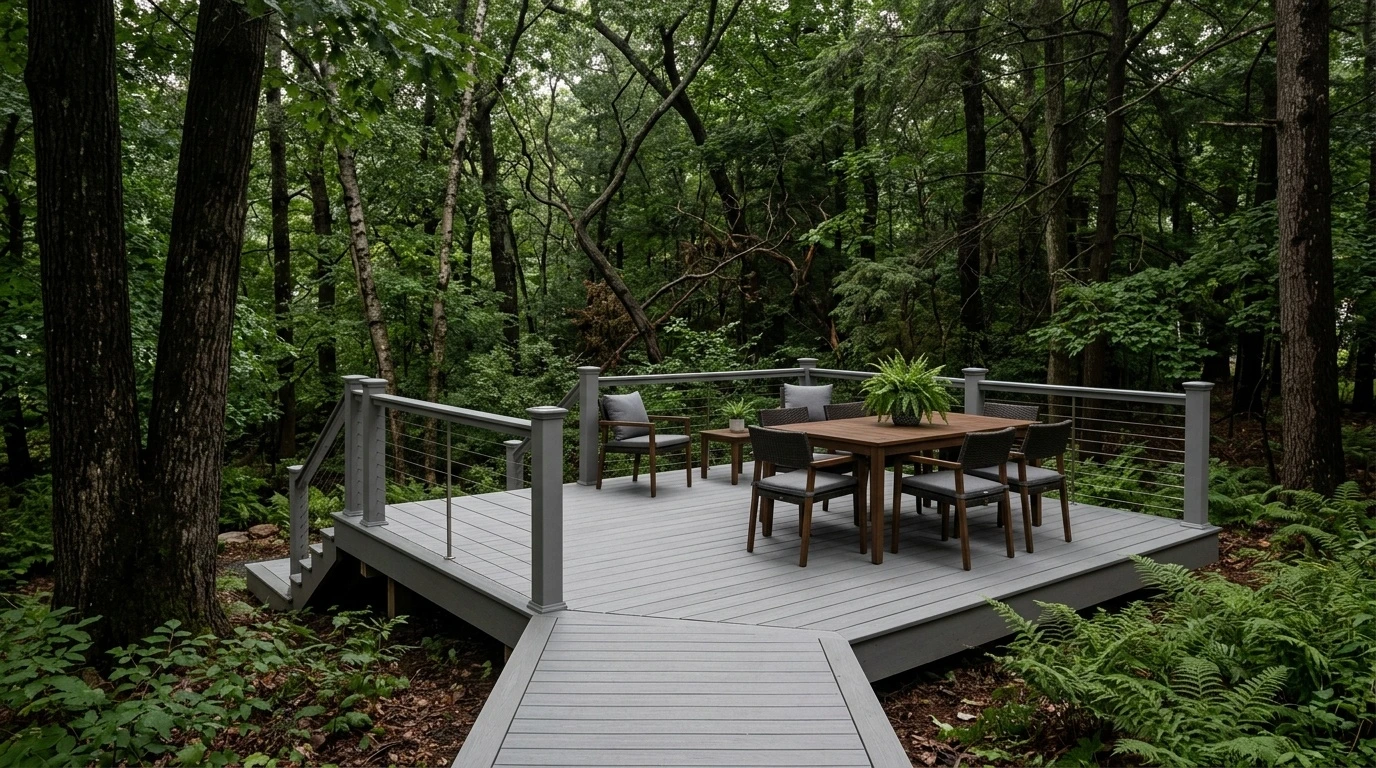
100% polymer, zero wood fiber. The most moisture- and mold-resistant decking we install, and the right call for pool surrounds, deep-shade lots, and every home within five miles of salt water.
DECKS US
·
Decks US
·
DECKS US
·
Decks US
·
DECKS US
·
Decks US
·
DECKS US
·
Decks US
·
DECKS US
·
Decks US
·
The Material for Your Property's Hardest Spot
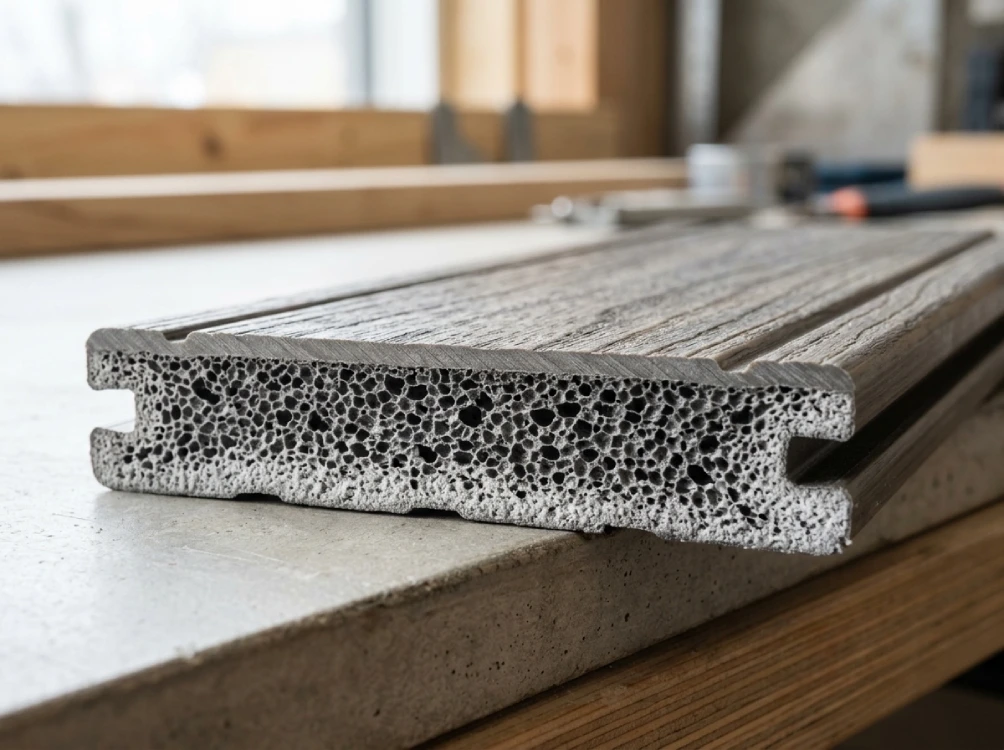
Every yard has one: the shaded north side that never dries, the ring around the pool, the lot two blocks from the water where salt eats everything metal. PVC decking was built for exactly those conditions. Unlike composite — which still contains wood fiber — capped PVC is 100% cellular polymer. No wood content means no wood-related weakness: nothing organic for mold to feed on, no moisture absorption into the core, no wood-driven swelling.
We install PVC decking across New York and New England specifically where composite’s few real limits start to show.
WHERE PVC WINS — And Where It's Overkill
PVC is the right answer for:
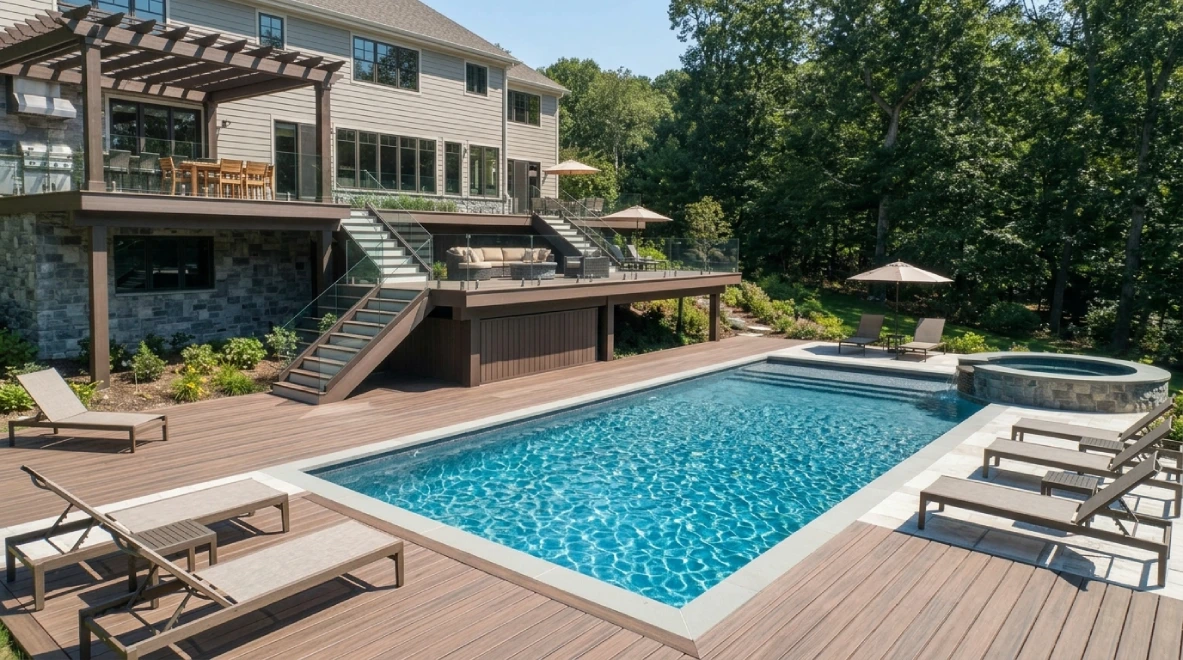
- Pool decks — indifferent to splash, chlorine, and salt systems; never splinters a bare foot
- Deep-shade and damp lots — no organic content for mold or mildew to colonize
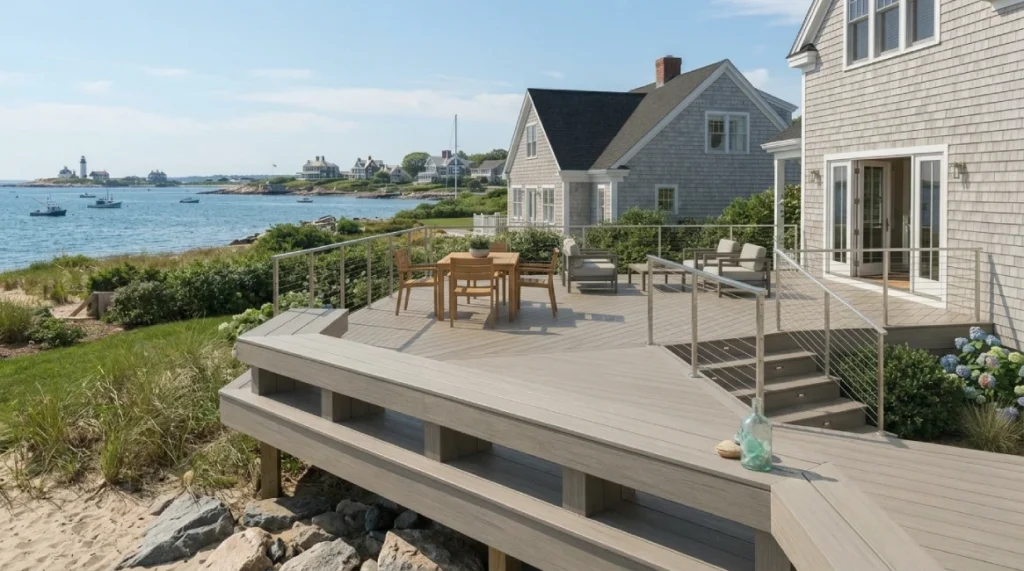
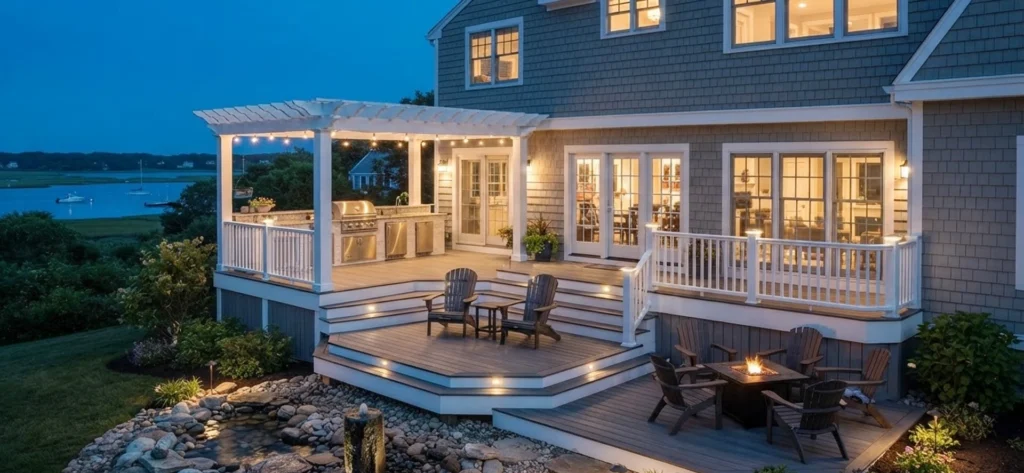
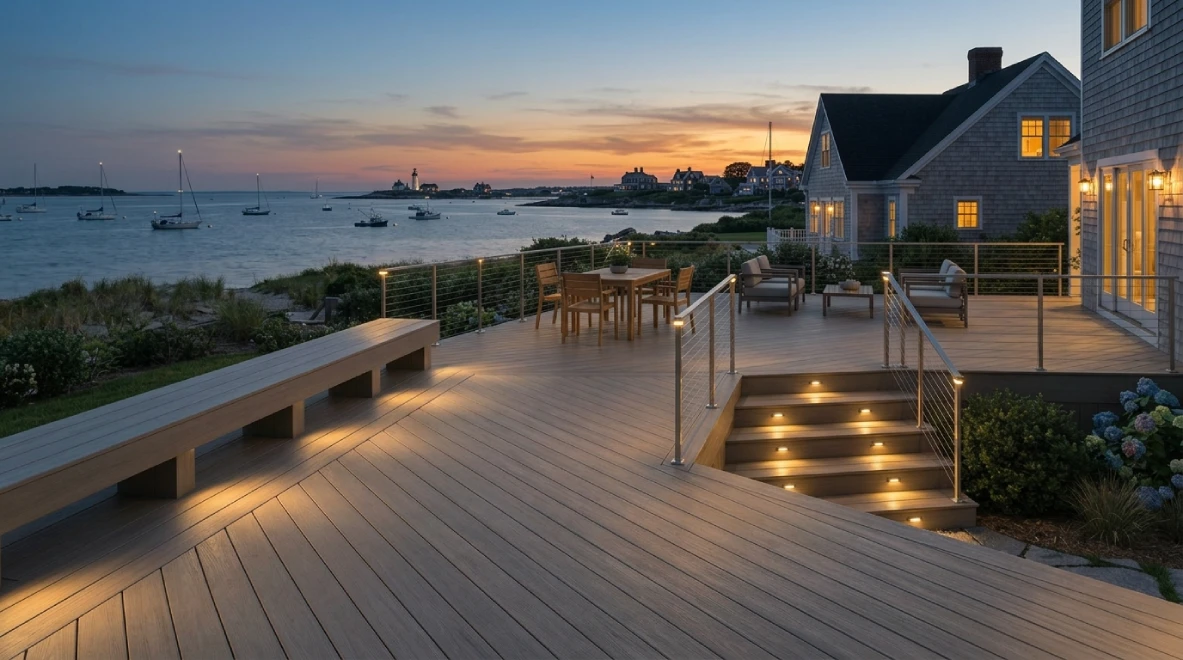
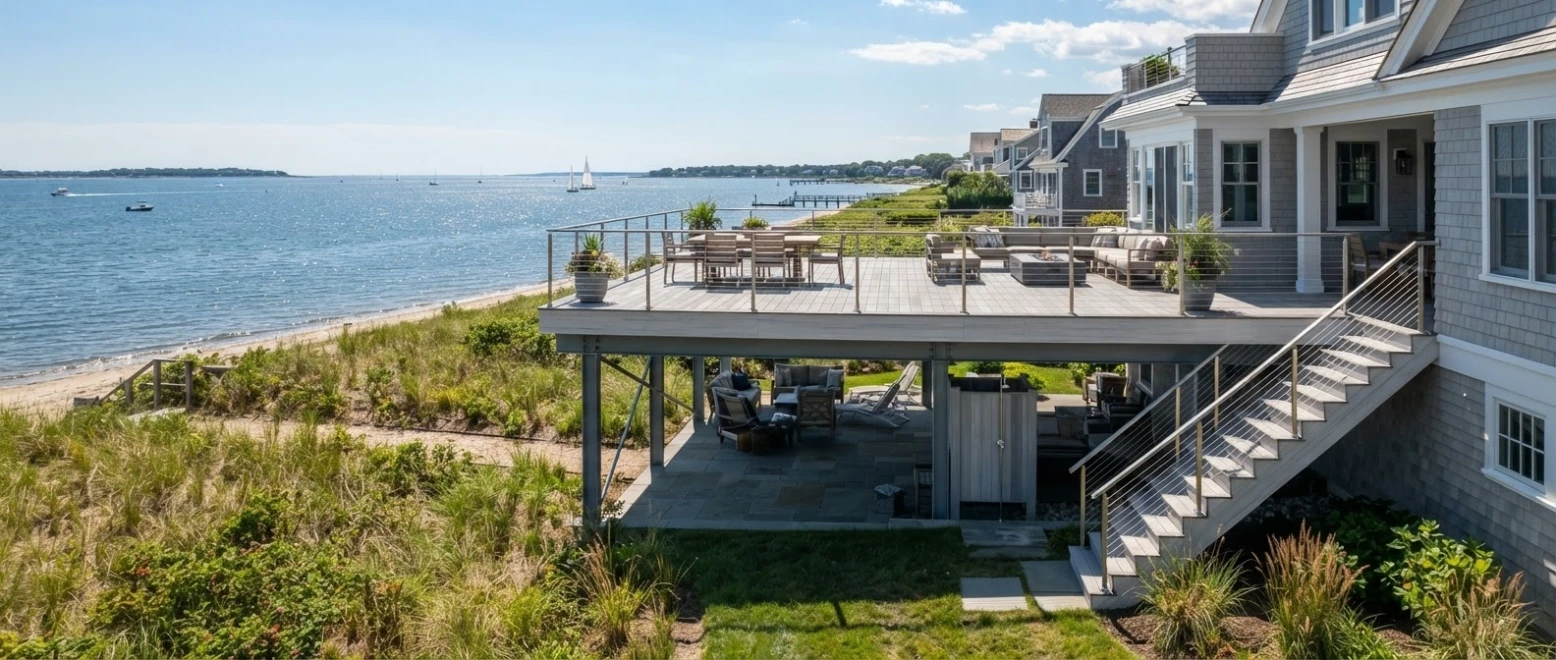
- Coastal properties — the strongest resistance to salt-air staining and degradation
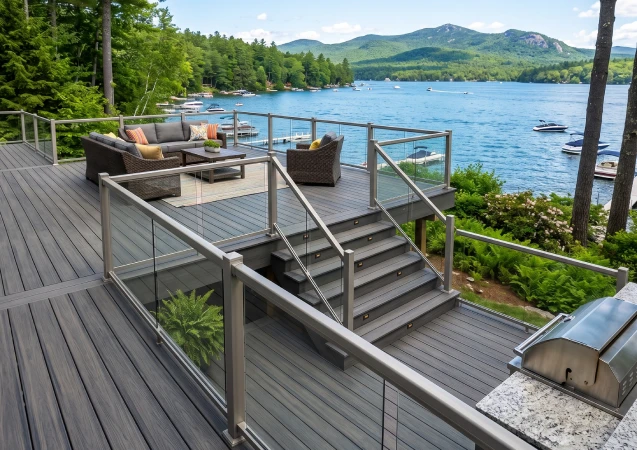
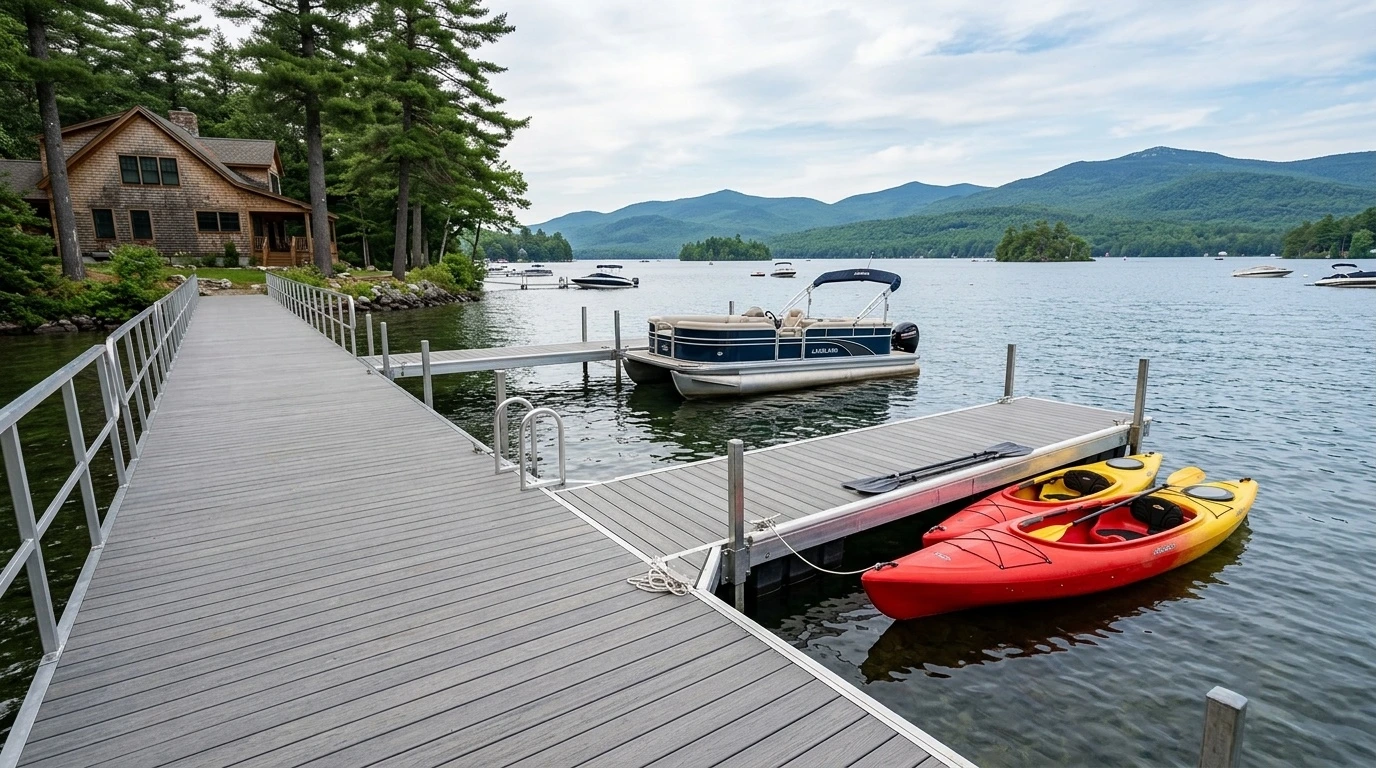
- Docks and waterfront — several lines are now marine-rated specifically for this
- Full-sun decks — PVC sheds heat faster than composite, a real comfort difference in July
PVC is probably overkill for: a standard sunny backyard deck with no water feature and no salt exposure. There, quality capped composite delivers the same look and lifespan for less. We’ll tell you that plainly rather than upsell you.
PVC vs. Composite — Which Board Wins Where
Capped PVC
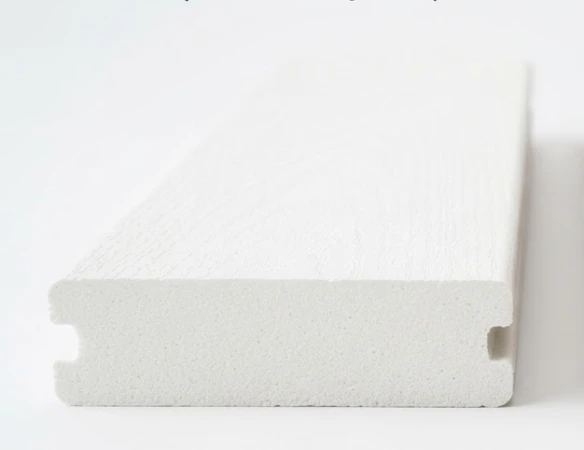
Made of: 100% cellular polymer
Moisture/mold: Best available
Heat: Sheds heat faster
Feel underfoot: Slightly more synthetic
Weight: Lighter
Cost (installed): Premium
Best for: Pools, shade, coastal, docks
Capped Composite
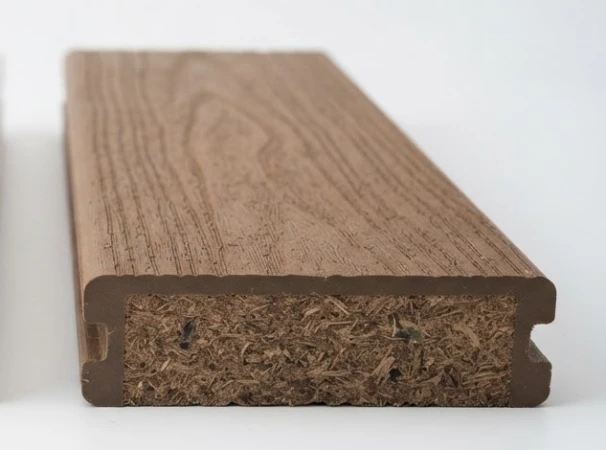
Made of: Wood fiber + recycled plastic
Moisture/mold: Very good
Heat: Retains heat longer
Feel underfoot: Marginally more wood-like
Weight: Heavier
Cost (installed): Mid-to-upper
Best for: Most standard decks
THE COASTAL CASE — The Five-Mile Rule
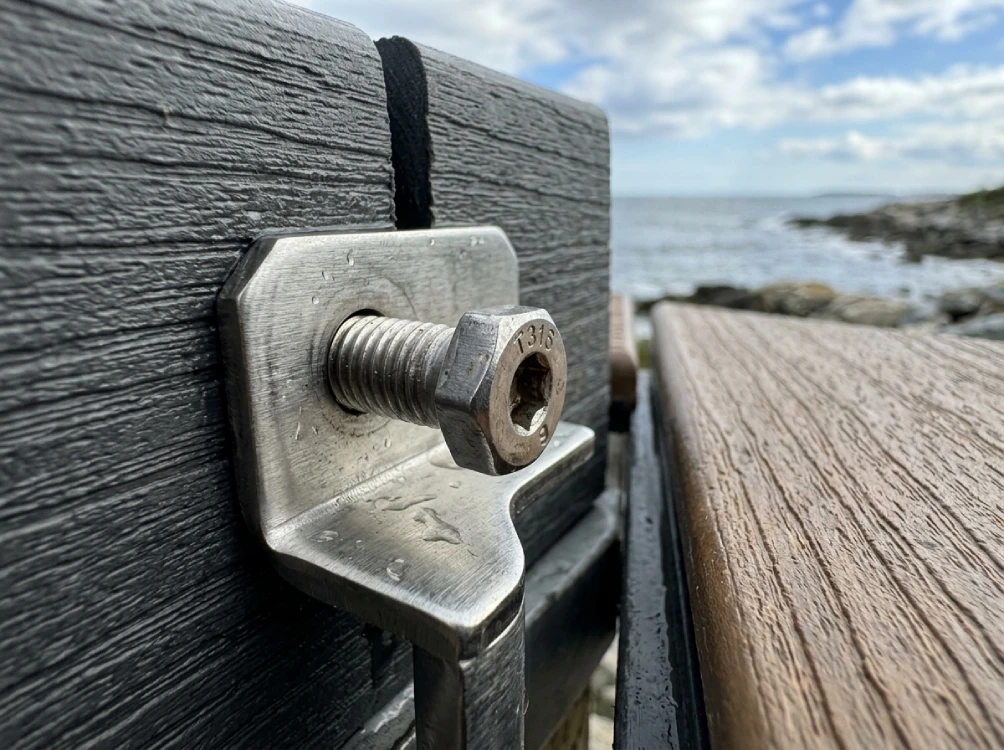
Here’s the detail national guides skip and coastal homeowners learn the hard way: within roughly five miles of the ocean, salt air is a corrosive environment. It attacks standard fasteners, connectors, and railing hardware long before it touches the board.
So on the Cape, the South Shore, Narragansett, and the Connecticut shoreline, our coastal spec is non-negotiable: PVC decking, T316 marine-grade stainless hardware, coastal-rated hidden fastener systems, and framing details that assume salt exposure. It costs more. It’s also the difference between a deck that lasts 25 years and one that’s failing at eight.
WHAT'S NEW IN 2026
- Marine-grade PVC lines — purpose-engineered for docks, pools, and waterfront exposure
- Expanded premium collections — TimberTech continues investing in Advanced PVC with long fade-and-stain warranties
- Hyper-realistic grain — the same visual-authenticity push transforming composite has reached PVC
- Recycled content — Advanced PVC lines now incorporate meaningful recycled material (~60% on some lines), countering the old “PVC isn’t green” objection
COST & VALUE
PVC sits at the premium end of installed decking cost — above composite — because 100% polymer construction costs more to manufacture. What that premium buys is the best moisture and mold resistance available in decking.
Worth it: pool decks, shaded/damp lots, coastal homes, docks. Probably not: a standard dry backyard where composite already solves the problem.
→ Price your project honestly in the Deck Cost Calculator.
INSTALLATION — The Details That Matter for PVC
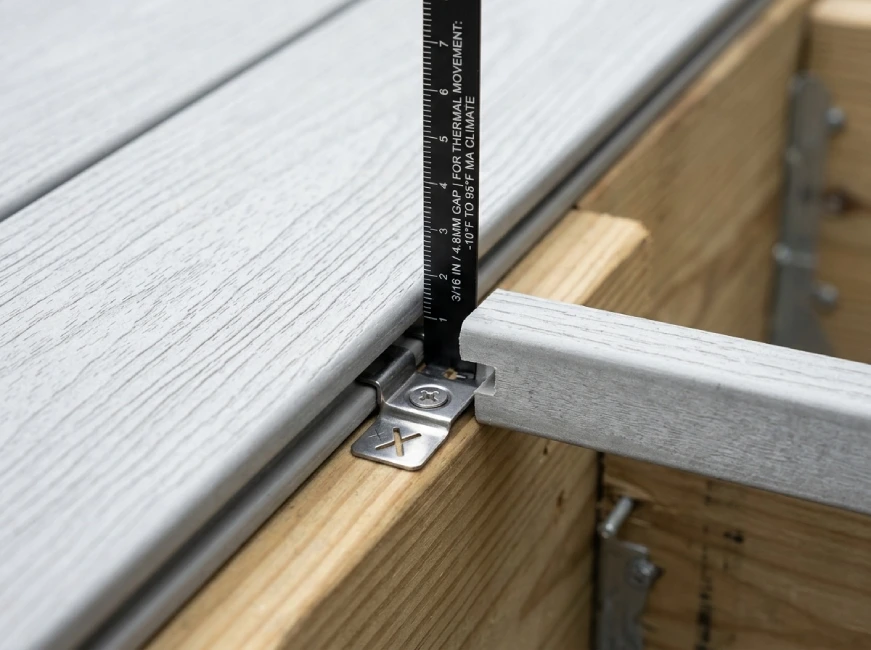
PVC’s one real quirk is thermal movement: it expands and contracts more than composite. In a climate that swings from -10°F to 95°F, that means expansion gapping must be exact — done to spec at the temperature of installation, not guessed. Done right, it’s invisible. Done wrong, you get buckling in August. We also use hidden fasteners designed for PVC’s specific groove profile, plus stainless hardware as standard on every coastal job.

Phone number
+978 601 4092
·
selected projects
·
selected projects
·
selected projects
·
selected projects
·
selected projects
·
selected projects
·
selected projects
·
selected projects
·
selected projects
·
selected projects
Explore our recent project

QUICK ENQUIRY
·
QUICK ENQUIRY
·
QUICK ENQUIRY
·
QUICK ENQUIRY
·
QUICK ENQUIRY
·
QUICK ENQUIRY
·
QUICK ENQUIRY
·
QUICK ENQUIRY
·
QUICK ENQUIRY
·
QUICK ENQUIRY
·
We’d love to hear from you
Phone number
+978 601 4092
We’d love to share more with you, please complete this form and our dedicated team will get back to you shortly.
Service Areas
Where We Build
Local crews across New York & New England — find your team and direct line, or enter your ZIP.
Massachusetts & New York
Tinos Inc.
Greater Boston, MetroWest, Cape Cod, Westchester, Hudson Valley & Long Island.
(617) 231-9842MANY
Connecticut, Rhode Island, Vermont & New Hampshire
Hartford, Providence, Newport, Burlington, Manchester, the Seacoast & beyond.
(978) 601-4092CTRIVTNH
ZIP Lookup
Enter your ZIP, meet your team
Your local team & direct number appear instantly.
FAQ — CAPPED PVC DECKING
What's the difference between composite and PVC decking?
Composite blends wood fiber with recycled plastic; PVC is 100% cellular polymer with no wood content. That makes PVC more resistant to moisture, mold, and staining — the better choice for pool decks, deep shade and coastal homes — while composite offers a slightly more natural feel at lower cost.
Is PVC decking better for a deck near the ocean?
Yes. PVC decking’s total resistance to moisture and organic decay makes it the strongest board choice for salt-air exposure. But the board is only half of it — within about five miles of the coast you also need T316 marine-grade stainless hardware, or standard fasteners will corrode long before the decking fails.
Does PVC decking stay cooler than composite?
Generally yes — PVC sheds heat faster than composite, which matters on a full-sun deck or pool surround. Color still matters most: lighter tones run cooler in either material.
Is PVC decking worth the higher price?
For pool decks, shaded or damp lots, and coastal properties — yes, it solves real problems; composite can eventually show in exactly those conditions. For a typical dry, sunny backyard, quality capped composite usually delivers the same result for less. We’ll tell you honestly which applies to your property.
Does PVC decking expand and contract?
Yes, more than composite — which is why correct expansion gapping is critical in New England’s temperature range. It’s a solved problem when installed to spec and a buckled deck when it isn’t.
Is PVC decking environmentally friendly?
More than it used to be. Advanced PVC lines now incorporate substantial recycled content (around 60% on some lines) and a 50-year-lifespan board that never needs chemical stain compares well against a wood deck replaced twice in the same period.
·
Articles & insights
·
Articles & insights
·
Articles & insights
·
Articles & insights
·
Articles & insights
·
Articles & insights
·
Articles & insights
·
Articles & insights
·
Articles & insights
·
Articles & insights