Glass Deck Railing — Nothing Between You and the View
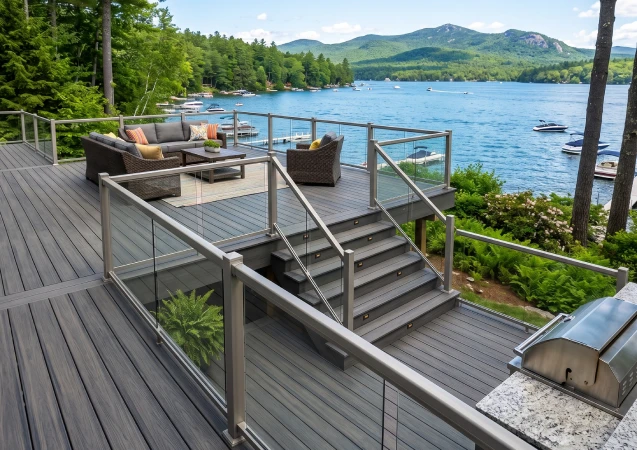
Tempered safety glass gives you a completely uninterrupted view and blocks the wind at the same time. For elevated, waterfront, and mountain-view decks, nothing else does both.
DECKS US
·
Decks US
·
DECKS US
·
Decks US
·
DECKS US
·
Decks US
·
DECKS US
·
Decks US
·
DECKS US
·
Decks US
·
When the View Is the Whole Investment
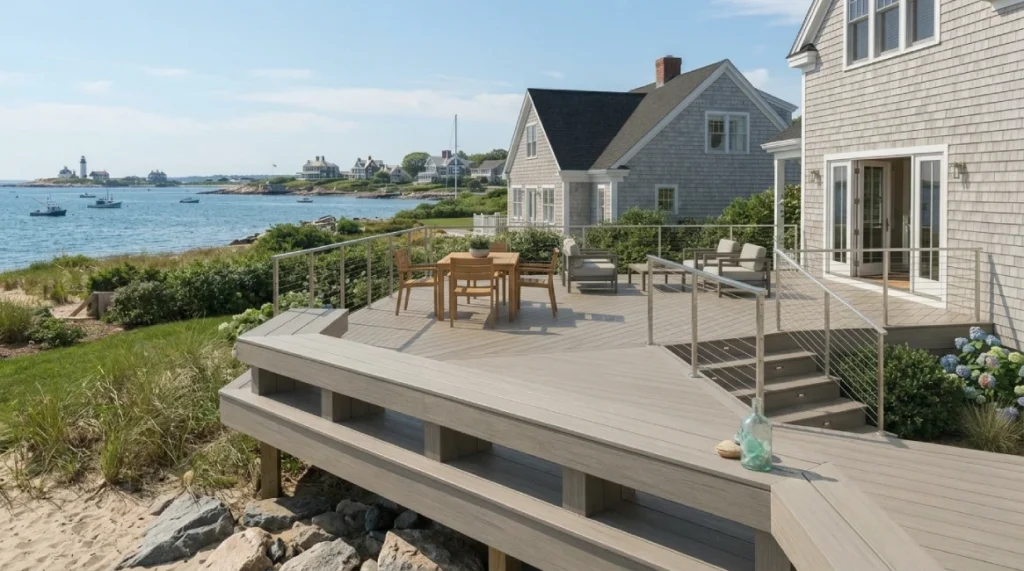
Some decks exist because of what you can see from them. A glass deck railing is the only system that preserves that view completely — no cables, no balusters, no interruption at all — while doing something cable and aluminum can’t: blocking the wind. On an exposed oceanfront deck or an elevated mountain-view terrace, that’s not a luxury detail; it’s the difference between a deck you use and one that’s too breezy to sit on.
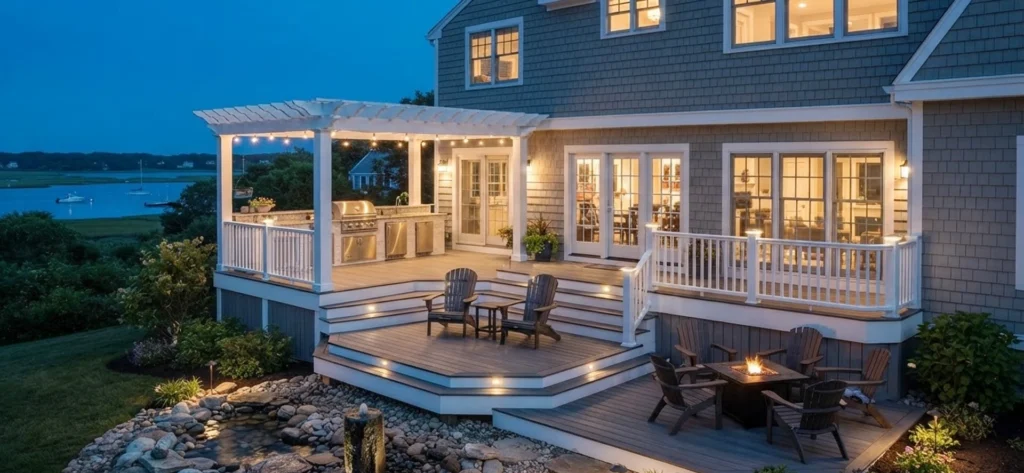
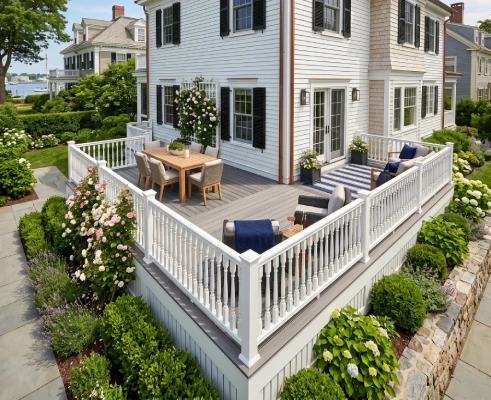
Decks US designs and installs tempered glass railing across New York and New England, on elevated decks, waterfront properties, rooftop spaces, and pool surrounds where both the view and the wind matter.
The Advantages of Glass Railing
- 100% visibility
— the only truly uninterrupted railing
- Wind protection
— a genuine windbreak that extends comfortable use on exposed decks
- Makes small decks feel larger
— no visual boundary means no perceived edge
- Premium, architectural look
— glass reads as luxury the moment you step onto the deck
- Works with every deck material
— composite, PVC, cedar, pressure-treated
- Pairs with pool codes
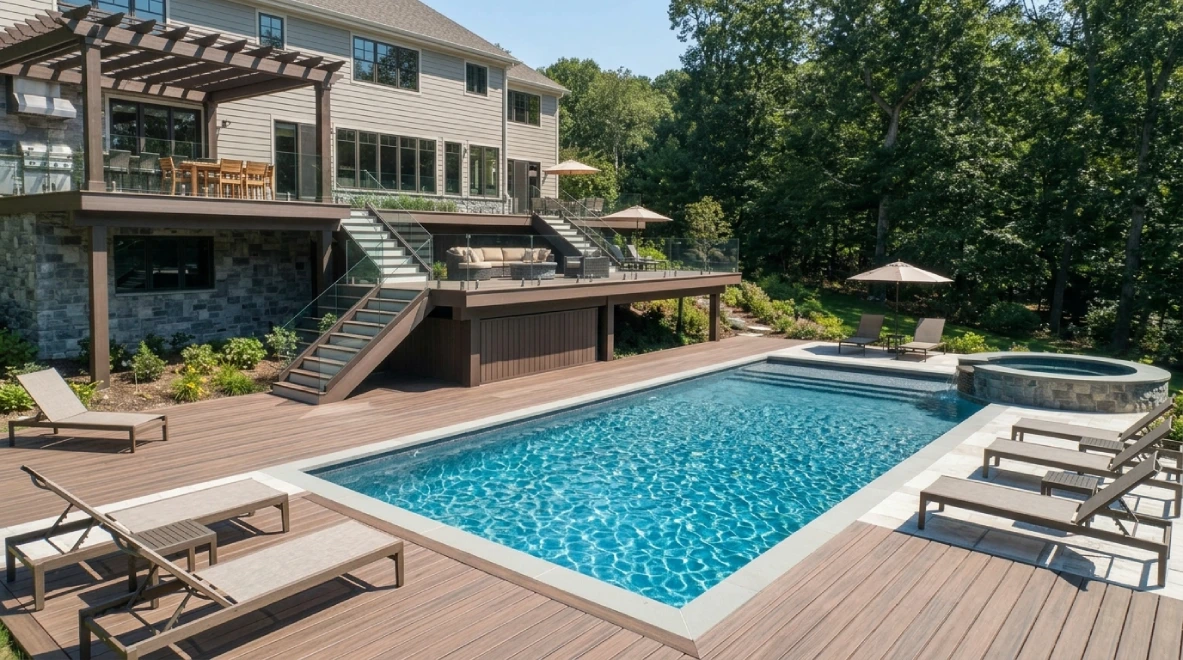
— panels can run continuously from pool barrier to deck for a seamless transition
- Extremely durable
— tempered safety glass is far stronger than ordinary glass and designed to break safely
Frameless vs. Semi-Frameless vs. Framed
Frameless | Semi-Frameless | Framed | |
|---|---|---|---|
Look | Purest, no visible structure | Slim posts between panels | Glass inside a rail frame |
View | Best | Excellent | Very good |
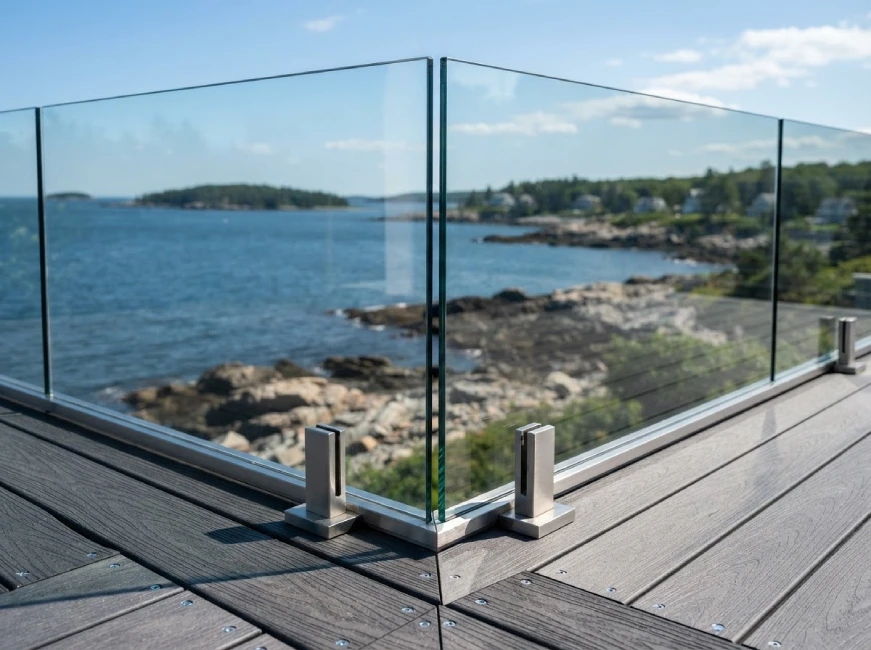
Structure | Base-shoe or spigot mounted | Slim aluminum/stainless posts | Full top and bottom rail |
Cost | Premium | High | Most accessible |
Best for | Statement decks, prime views | Balance of look and value | Matching an existing railing style |
Frameless uses a base shoe or spigots to hold thick tempered panels with no posts between them — the purest expression, and the most expensive. Semi-frameless slots panels between slim posts, keeping most of the openness at meaningfully lower cost. Framed sets glass inside an aluminum top-and-bottom rail — the most economical entry to glass, and the easiest to coordinate with existing aluminum railing elsewhere on the deck.
The Wind Advantage — Underrated and Real
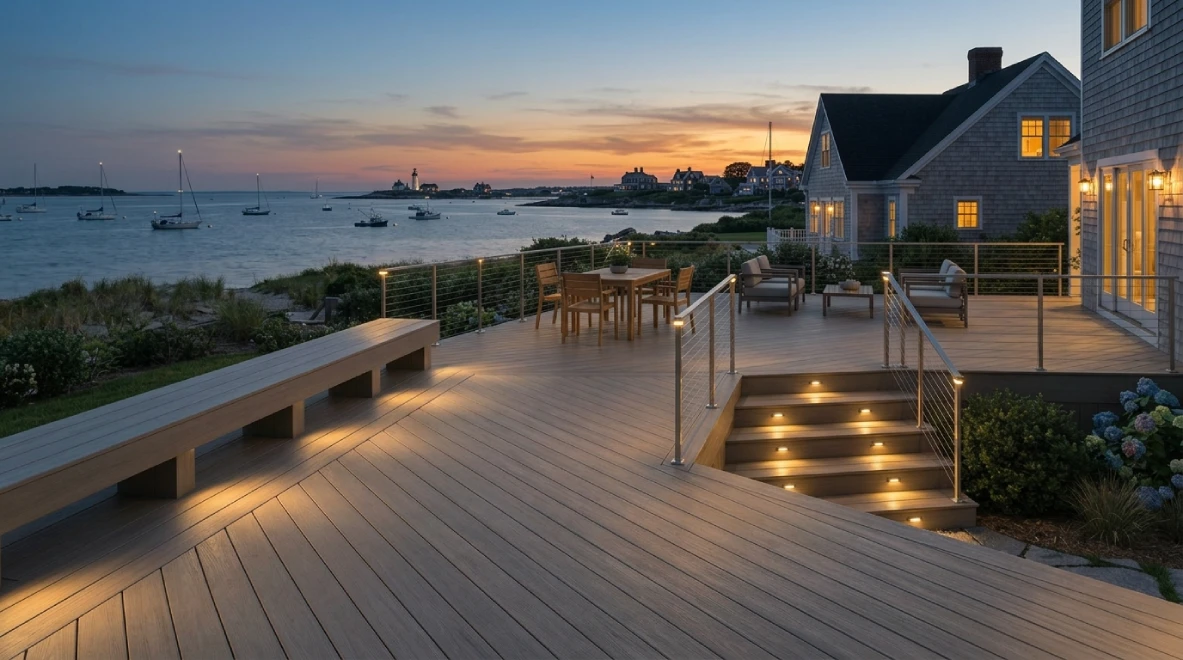
This is the argument for glass that gets least attention and matters most in New England. An oceanfront deck on the Cape, an exposed lakefront terrace on Winnipesaukee, a rooftop deck in Boston — these places have views precisely because they’re exposed, and exposure means wind. Cable and aluminum let it straight through. Glass stops it, turning a deck that’s uncomfortable half the season into one you can actually sit on in May and October.

Phone number
+978 601 4092
Safety & Code
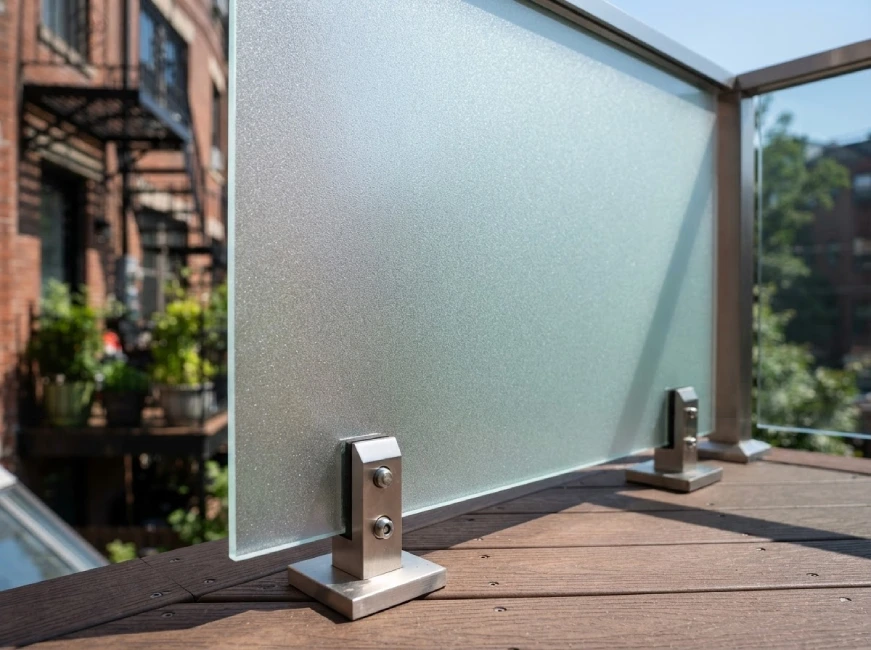
Deck railing is generally required above 30 inches of drop, typically 36–42 inches tall for residential decks. Pool barriers are held to a higher standard — often 48 inches — so on pool decks we design panel heights accordingly, and glass is excellent here because a barrier that’s required to exist can at least be invisible.
All structural glass railing uses tempered safety glass, which is heat-treated to be dramatically stronger than ordinary glass and, if it ever does break, fragments into small blunt pieces rather than shards. Panel thickness, mounting hardware, and post spacing are all engineered to meet code load requirements — this is not a place for improvised hardware.
Phone number
+978 601 4092
The Cleaning Reality — Told Straight
We won’t pretend otherwise: glass shows everything. Salt film on the coast, pollen in May, rain spotting, fingerprints, and dog nose prints. Keeping a glass railing looking like the brochure means cleaning it regularly — realistically a few times a season inland, more often near salt water.
If that sounds like a chore you’d resent, cable railing gives you 90% of the view with almost none of the cleaning, and we’d rather tell you that now than have you regret the upgrade. Glass is the right call when the view justifies the upkeep — and when you want the wind blocked.
Installation
Glass is heavy and unforgiving of structural sloppiness. Base shoes and spigots must anchor into properly blocked and reinforced framing, panels must be set to exact tolerances, and hardware must be rated for the panel weight and wind load. We engineer the substructure for it before a single panel arrives — on coastal jobs, with stainless hardware throughout.
Cost
Glass is the premium end of the railing market — the highest installed cost of any system we build, with frameless above semi-frameless above framed. You’re buying an uninterrupted view and a windbreak in one.
·
selected projects
·
selected projects
·
selected projects
·
selected projects
·
selected projects
·
selected projects
·
selected projects
·
selected projects
·
selected projects
·
selected projects
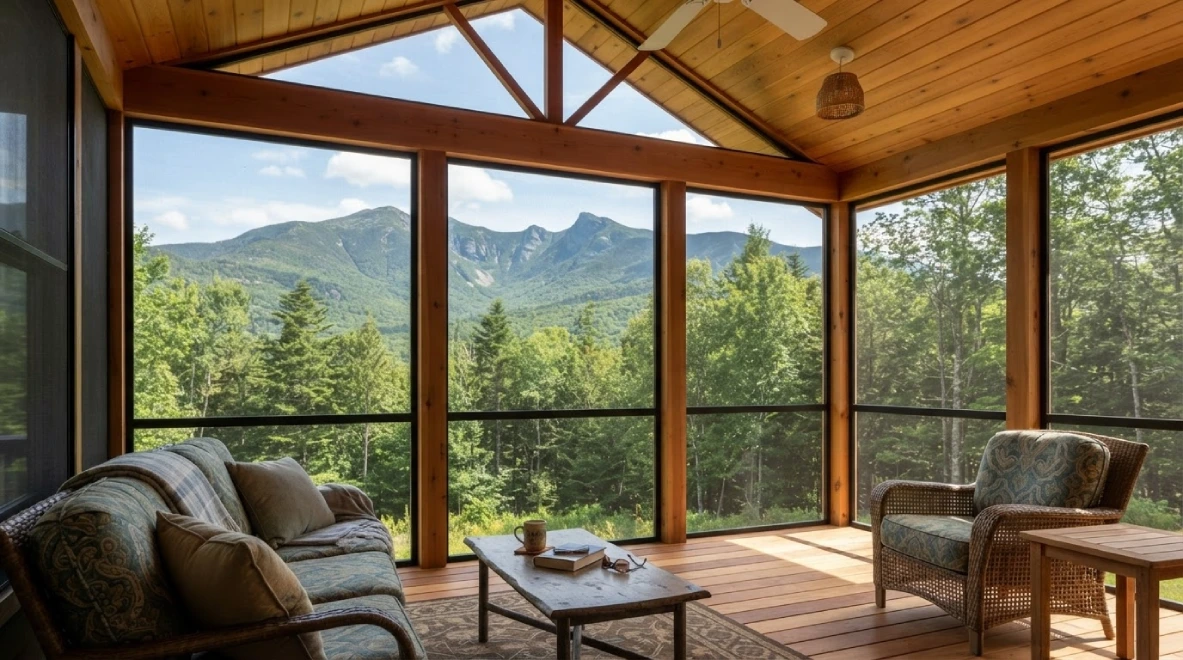
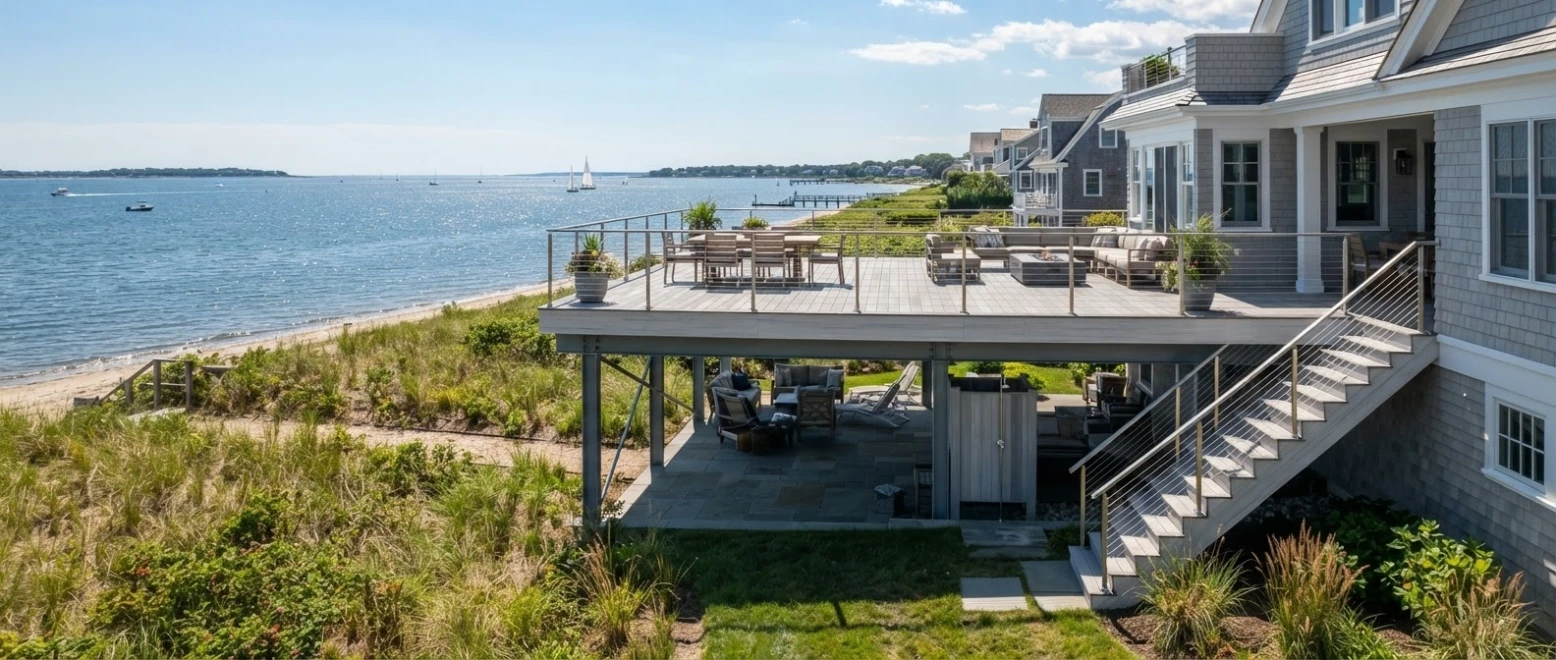
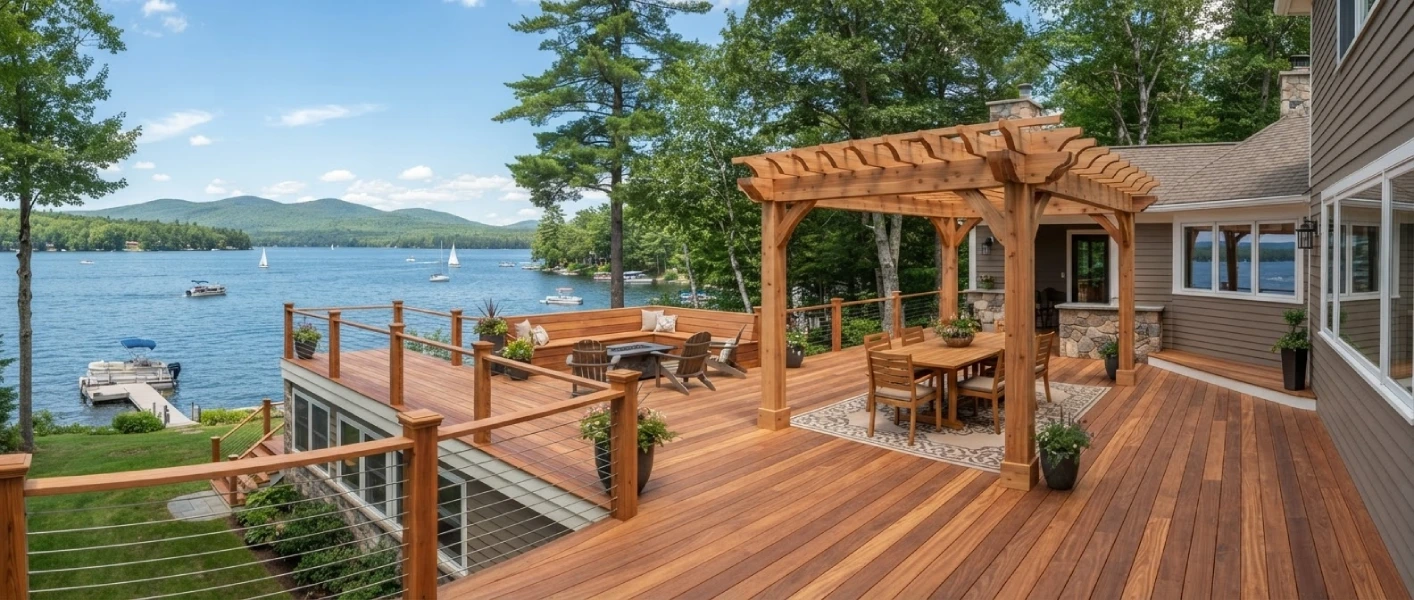
Explore our recent project

QUICK ENQUIRY
·
QUICK ENQUIRY
·
QUICK ENQUIRY
·
QUICK ENQUIRY
·
QUICK ENQUIRY
·
QUICK ENQUIRY
·
QUICK ENQUIRY
·
QUICK ENQUIRY
·
QUICK ENQUIRY
·
QUICK ENQUIRY
·
We’d love to hear from you
Phone number
+978 601 4092
We’d love to share more with you, please complete this form and our dedicated team will get back to you shortly.
Service Areas
Where We Build
Local crews across New York & New England — find your team and direct line, or enter your ZIP.
Massachusetts & New York
Tinos Inc.
Greater Boston, MetroWest, Cape Cod, Westchester, Hudson Valley & Long Island.
(617) 231-9842MANY
Connecticut, Rhode Island, Vermont & New Hampshire
Hartford, Providence, Newport, Burlington, Manchester, the Seacoast & beyond.
(978) 601-4092CTRIVTNH
ZIP Lookup
Enter your ZIP, meet your team
Your local team & direct number appear instantly.
FAQ — Glass Deck Railing
Is glass deck railing safe?
Yes. Structural glass railing uses tempered safety glass, which is heat-treated to be far stronger than ordinary glass and designed to break into small blunt fragments rather than sharp shards if it ever fails. Panel thickness, hardware, and spacing are engineered to meet the same code load requirements as any other railing.
What's the difference between frameless and semi-frameless glass railing?
Frameless glass railing has no posts between panels — it’s held by a base shoe or spigots for the purest, most uninterrupted look, and it’s the most expensive. Semi-frameless sets panels between slim posts, keeping most of the openness at a lower cost. Framed glass sits inside a top and bottom rail and is the most economical entry point.
Is aluminum railing more expensive than wood?
Yes — and it’s the only common railing type that does. Cable and aluminum let wind pass straight through; glass acts as a genuine windbreak, which meaningfully extends comfortable use on exposed oceanfront, lakefront, and rooftop decks in New England.
How much cleaning does glass railing really need?
More than any other railing. Glass shows salt film, pollen, rain spotting, and fingerprints, so expect to clean it a few times a season inland and more often near salt water. If that’s unappealing, cable railing delivers most of the view with almost none of the cleaning.
Can glass railing be used around a pool?
Yes, and it’s an excellent choice — pool barriers are typically held to a higher minimum height than deck railing (often 48 inches), and glass lets you meet that requirement without walling off the view. We design panel heights to your local pool barrier code.
Is glass railing worth the cost?
When the view is exceptional and the deck is exposed to wind, yes — nothing else preserves the view completely and blocks the breeze. For a typical backyard deck without a standout view, cable or aluminum delivers a better return.
·
Articles & insights
·
Articles & insights
·
Articles & insights
·
Articles & insights
·
Articles & insights
·
Articles & insights
·
Articles & insights
·
Articles & insights
·
Articles & insights
·
Articles & insights